“A Total Disrespect!” Stiliyan Petrov Breaks Silence on Celtic Board’s Controversial O’Neill Call
Tensions are rising at Celtic F.C. after a damaging defeat to Hibernian left their Scottish Premiership title defence hanging in the balance — and now former club captain Stiliyan Petrov has publicly criticised the Parkhead board for what he believes is unfair pressure placed on legendary manager Martin O’Neill.
Celtic’s loss to Hibernian F.C. has not only dented their hopes of retaining the title but has intensified scrutiny on the club’s hierarchy. With supporters already frustrated over recruitment decisions and a perceived lack of ambition in key moments of the campaign, the setback has deepened a growing disconnect between the boardroom and the stands.
Petrov, who played under O’Neill during one of the most successful eras in the club’s modern history, did not hold back in his assessment. The former Bulgarian international believes the board has leaned too heavily on the 73-year-old manager — not only to deliver results on the pitch but to steady unrest off it.

According to Petrov, asking O’Neill to “save the club” in such circumstances is unreasonable and unfair, particularly given the scale of the challenges Celtic have faced this season. He argued that responsibility for long-term planning, squad investment, and maintaining unity within the club should lie squarely with those upstairs rather than being placed on the shoulders of a veteran manager already locked in a demanding title race.
“This is not just about tactics or team selection,” Petrov suggested. “It’s about structure, direction and leadership from the top. A manager’s job is to prepare the team, compete and win matches — not to repair fractured relationships between the board and supporters.”
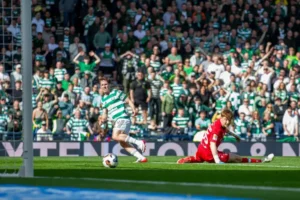
The defeat to Hibs served as a flashpoint. Celtic entered the fixture knowing that any slip-up could prove costly in a fiercely contested title battle. Instead of strengthening their grip at the top, they delivered a performance that left fans frustrated and rivals encouraged. Questions quickly followed about recruitment strategy, squad depth, and whether the club had done enough in recent transfer windows to maintain dominance.
Supporters have voiced concerns throughout the season, particularly regarding the club’s approach in the market and what some perceive as a cautious financial strategy. While Celtic remain one of the strongest sides in Scotland, the sense among sections of the fanbase is that opportunities to build from a position of strength have not been fully seized.
Petrov’s comments reflect that underlying tension. Having experienced firsthand what strong leadership and decisive backing can achieve, he pointed to O’Neill’s first spell at the club as an example of alignment between manager and board. During that period, Celtic not only dominated domestically but also made a significant impact in European competition, culminating in a UEFA Cup final appearance in 2003.
Back then, Petrov said, there was clarity of vision. The manager was supported, recruitment matched ambition, and supporters felt connected to the club’s direction. In contrast, he believes the current climate has created unnecessary distractions.
“At this stage of the season, unity is everything,” Petrov added. “When there is noise around the board, when fans feel unheard, it affects the atmosphere. And when that atmosphere turns negative, it can seep into performances.”
O’Neill, revered by the Celtic support for his previous achievements, returned to the club with immense goodwill. However, the romanticism of that reunion has gradually given way to the harsh realities of a demanding campaign. Balancing expectations with practical limitations has proven difficult, particularly as rivals continue to push hard in the title race.
Petrov insisted that O’Neill should not be the lightning rod for wider frustrations. In his view, the board must take greater accountability for the club’s trajectory. That includes transparent communication with supporters and ensuring that football decisions are aligned with long-term ambitions rather than short-term fixes.
The former midfielder also highlighted the physical and emotional toll on a manager of O’Neill’s age. At 73, competing in a relentless league schedule while navigating internal turbulence represents a significant challenge. Petrov questioned whether it was fair to expect him to simultaneously deliver silverware and restore harmony behind the scenes.
Despite the criticism, Petrov made clear that the title race is far from over. Celtic remain firmly in contention, and a strong run of form could quickly shift the narrative. The Scottish Premiership has often swung on fine margins, and momentum can change within weeks.
However, he warned that success will require collective responsibility. Players must respond on the pitch, the manager must be backed fully, and the board must address the concerns of the supporters. Without that alignment, even the most experienced manager can struggle.
For Celtic fans, the coming weeks will be pivotal. Each fixture now carries heightened significance, not just for the standings but for the broader mood around the club. Victory could restore confidence and unity; further setbacks could deepen divisions.
Petrov’s intervention underscores how much Celtic means to former players who were part of its golden eras. His criticism does not come from hostility but from a desire to see the club thrive again under stable, cohesive leadership.
As the Premiership title battle intensifies, all eyes will be on how Celtic respond — both on the pitch and in the boardroom. Whether the hierarchy chooses to address the concerns raised, or continues on its current path, may ultimately shape not only this season’s outcome but the long-term direction of the club.
One thing is certain: asking Martin O’Neill to carry the weight of both footballing success and institutional repair is a heavy burden. And if Celtic are to steady the ship and reclaim full control of their destiny, responsibility must be shared rather than placed on one revered figure alone.