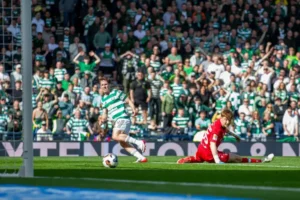
Celtic Outrage! Martin O’Neill Blasts Officials and VAR After Dramatic Pittodrie Clash
manager Martin O’Neill launched a fierce criticism of match officials and the use of VAR following his side’s dramatic and controversial clash with Aberdeen F.C. at Pittodrie.
The highly charged encounter at Pittodrie Stadium ended amid a storm of debate after a series of decisions left the Celtic bench furious and supporters venting their frustration long after the final whistle. O’Neill did not hold back in his post-match assessment, questioning both the on-field officiating and the application of video technology in key moments that he believes shaped the outcome.
The contest itself had all the intensity expected of a crucial Scottish Premiership fixture. Celtic started brightly, dominating possession and creating several early chances. Their attacking intent paid off midway through the first half when a flowing move resulted in a well-taken goal that silenced the home crowd.
Aberdeen, however, responded with determination. The hosts grew into the game and equalised before the interval with a powerful header from a set piece, sending the teams into the break level and setting up a tense second half.
The controversy began shortly after the restart. Celtic appeared to have regained the lead when a low strike found the net following a crowded penalty area scramble. Celebrations were cut short as the referee signalled for a VAR review. After a lengthy delay, the goal was ruled out for what was deemed a marginal offside in the build-up.
Replays shown inside the stadium appeared inconclusive, and O’Neill was visibly incensed on the touchline. The decision shifted the momentum of the match, lifting Aberdeen and energising the home support.
Celtic’s frustration deepened minutes later when Aberdeen were awarded a penalty following a coming together inside the box. Once again, VAR was involved. After consulting the pitch-side monitor, the referee pointed to the spot, judging that there had been sufficient contact to warrant the decision. Aberdeen converted the penalty to take the lead for the first time in the match.
Speaking after the game, O’Neill described the sequence of decisions as “incredibly difficult to accept.”
“I have watched the incidents back, and I struggle to understand how one is given and the other is not,” he said. “If we are going to use VAR, it has to bring clarity and consistency. Tonight, I don’t think it did either.”
The Celtic manager stressed that he is not opposed to technology in principle but believes its current implementation in the Scottish game is creating more controversy than it resolves.
“Football is an emotional sport,” O’Neill continued. “We all understand mistakes can happen. But when you have technology there to eliminate clear errors, you expect it to be applied in a way that everyone can see and understand. Supporters inside the stadium had no idea what was going on. Even from the bench, we were left in the dark.”
Celtic pushed hard for an equaliser in the closing stages, throwing men forward and forcing Aberdeen’s goalkeeper into a series of saves. A late header struck the crossbar, while another goalmouth scramble ended with desperate defending from the home side.
Tempers flared in stoppage time when Celtic appealed for a penalty of their own after one of their forwards went down under pressure. The referee waved play on, and VAR did not intervene, a decision that further angered the visiting players and coaching staff.
At full time, O’Neill approached the officials for what appeared to be a heated exchange before being ushered away by members of his staff.
Despite his frustration, the manager was careful not to place all blame on the refereeing team. He acknowledged that his side had opportunities to put the game beyond doubt.
“We had chances to win the match,” he admitted. “At this level, you have to take them. We created enough tonight to score more than once. But when key decisions go against you in moments that can define the outcome, it’s difficult not to feel aggrieved.”
The result could have significant implications in the title race, with Celtic seeking to maintain momentum in a tightly contested campaign. Dropped points at this stage of the season are costly, and O’Neill made clear that his focus will now shift to ensuring his squad responds positively.
“The important thing is how we react,” he said. “We can’t allow frustration to derail us. We have big games coming up, and we must channel this energy in the right way.”
Aberdeen manager Jimmy Thelin, meanwhile, declined to comment extensively on the officiating, stating that such matters are for the authorities to review. He praised his team’s resilience and organisation, particularly in the closing stages when they were forced to defend deep.
For Celtic supporters, however, the overriding feeling was one of injustice. Many took to social media to question the consistency of VAR decisions and to call for greater transparency in how reviews are conducted.
The debate over VAR has been a recurring theme in Scottish football this season, with several clubs voicing concerns about delays, communication, and the interpretation of subjective incidents. O’Neill’s outspoken remarks are likely to intensify that discussion in the days ahead.
As the dust settles on a dramatic night at Pittodrie, the focus will inevitably turn to whether the governing body addresses the concerns raised. For Celtic, the challenge is immediate: regroup, refocus, and ensure that controversy does not overshadow their ambitions.