Morocco Admin Forced to Delete Ruthless Video Mocking Three Scotland Players as Furious Fans Demand Answers

Morocco Admin Forced to Delete Ruthless Video Mocking Three Scotland Players as Furious Fans Demand Answers.
In the hyper-connected era of modern international football, the boundary between playful digital engagement and outright disrespect is razor-thin. That boundary was crossed tonight at Gillette Stadium, leaving an administrative firestorm in the wake of Morocco’s tense 1-0 victory over Scotland.
What should have been a night celebrating a tactical masterclass by the Atlas Lions has instead been completely overshadowed by a severe lapse in digital judgment. Minutes after the final whistle, the official media channels of the Moroccan National Team published a highly controversial, short-form video that directly targeted and mocked three prominent members of the Scottish defensive line.
The post ignited immediate fury from the traveling Scottish fanbase, whose intense online backlash ultimately forced the Moroccan media team into a rapid digital retreat. Though the video was deleted in a matter of minutes, its digital footprint remains indelible, sparking a massive sporting row between the two nations.
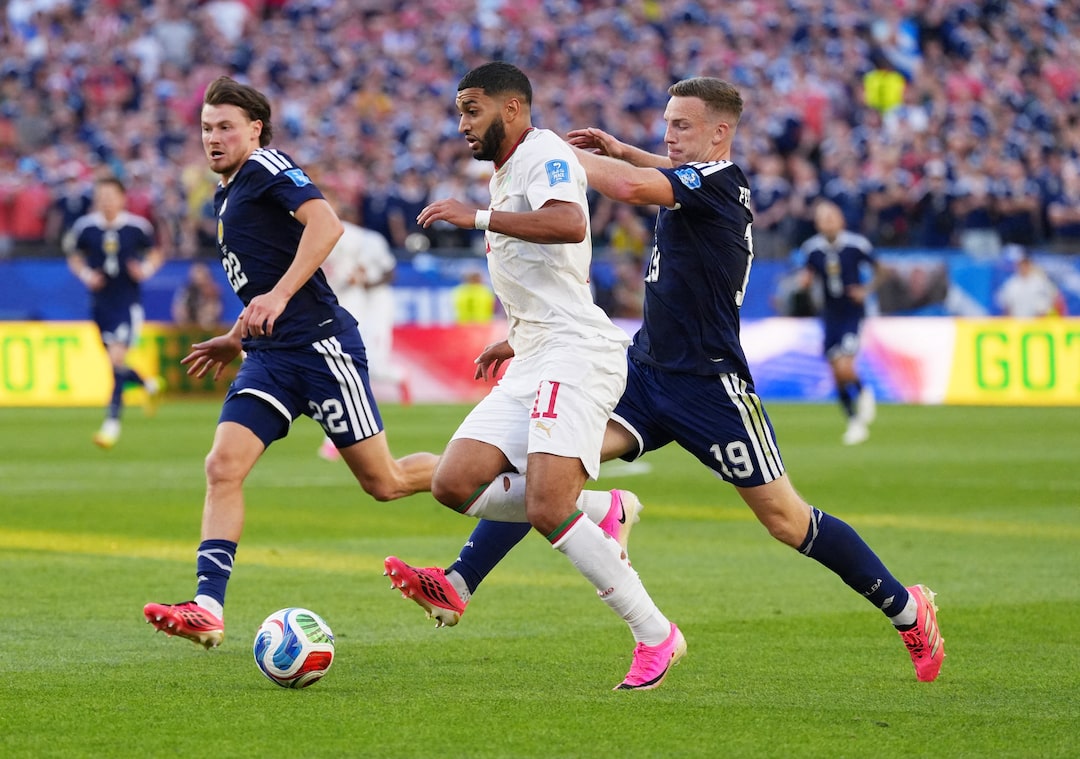
The video in question—captioned with the provocative phrase, “Left them at the Boston Tea Party ☕️🇲🇦”—was styled in the fast-paced, irreverent format typical of contemporary TikTok and Instagram Reel content. However, rather than highlighting the brilliance of Ismael Saibari’s early match-winning goal, the production choices took a distinct turn toward public humiliation.
The 30-second clip utilized high-definition, multi-angle footage of the decisive play. Using digital isolation tracking tools, the video specifically highlighted three Scottish defenders who had committed to a sliding block to stop Saibari’s run. In the edited footage, the speed was altered to slow-motion at the exact moment the players missed the tackle, accompanied by exaggerated, cartoonish sound effects and a circus-themed audio track.
The clip concluded with a heavily stylized graphic overlay that visually “swept” the three isolated Scottish international players off the Gillette Stadium pitch with a digital broom, replacing them with a scoreboard reading “Morocco 1, Scotland 0.”The video was broadcast to millions of followers across X (formerly Twitter), Instagram, and TikTok. While “admin banter” has become a staple of club football marketing, such direct, personalized mockery is virtually unprecedented at the international tier, where strict FIFA guidelines govern mutual respect and cultural diplomacy.
The Power of the Tartan Army’s BacklashThe reaction to the post was instantaneous, but it was the targeted response from the Scottish supporters that dictated the narrative. Within sixty seconds of publication, thousands of members of the Tartan Army—famed worldwide for their passionate and fiercely protective nature—flooded the comment sections across all platforms.
The backlash was a coordinated wave of condemnation. Scottish fans flooded the Moroccan federation’s pages, labeling the clip “classless,” “disrespectful,” and a breach of basic sporting etiquette after what had been a highly competitive, honorable ninety minutes on the pitch. Beyond angry comments, tech-savvy supporters began a mass-reporting campaign, flagging the video for targeted harassment and bullying under platform guidelines.
Realizing the scale of the public relations disaster and the sheer volume of negative engagement accumulating by the second, the Moroccan media delegation was forced into a humiliating u-turn. Approximately four and a half minutes after going live, the video was pulled from all official platforms. By then, however, the damage had been done. The content had already transitioned from official media to viral internet lore, duplicated across thousands of independent sports accounts through screen recordings.
Sources close to the Moroccan camp, speaking on the condition of anonymity, indicate that the post was the result of a severe internal miscommunication. The video was reportedly produced by a third-party digital creative agency hired to manage the team’s social media output during their North American tour. It was allegedly queued and published without the final authorization or review of the Moroccan Football Federation’s (FRMF) senior communications director.The Scottish Football Association (SFA) reacted with swift and measured fury.
Before the post was even deleted, senior SFA officials at Gillette Stadium had already contacted FIFA match commissioners to lodge an official verbal complaint regarding a breach of the FIFA Code of Conduct, specifically citing regulations against provocative and ungentlemanly digital behavior.
Scottish pundits and former international players were vocal in their condemnation during post-match broadcasts, praising the fans for forcing the deletion but demanding further accountability. Conversely, the initial reaction from a segment of the Moroccan fanbase was defensive, viewing the video as harmless modern banter meant to engage a younger audience. However, as the potential regulatory consequences became clearer, more moderate voices within the Moroccan football community joined the calls for accountability.
Looking Ahead: Regulatory ConsequencesAs both teams prepare to navigate the remainder of a highly competitive group stage, this administrative error has injected an intense hostility into the tournament. FIFA’s disciplinary committee is expected to launch a formal review of the incident tomorrow morning. Under current guidelines regarding the digital conduct of member associations, the FRMF could face a substantial financial penalty and a formal warning regarding future media outputs.
More than the financial cost, the incident serves as a stark warning to international sports organizations about the dangers of outsourcing emotional narratives to external digital agencies. In the quest for viral engagement, the fundamental values of international sportsmanship can be easily compromised. The Moroccan media team tonight learned a harsh lesson: on the world stage, a victory on the pitch can be easily tarnished by a single click in the press box.