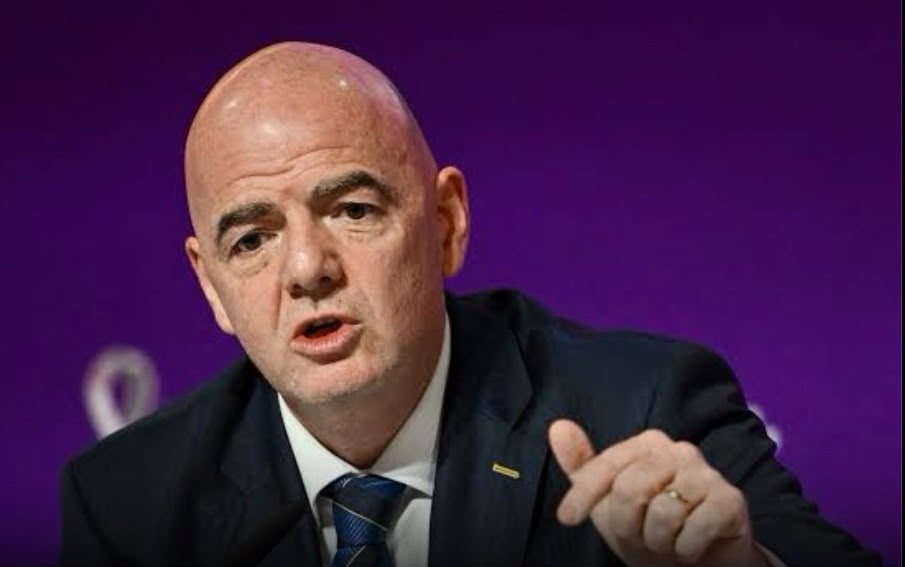
INFANTINO FINALLY BREAKS HIS SILENCE AS FIFA PRESIDENT RESPONDS TO ALLEGATIONS AFTER WEEKS OF SPECULATION

🚨INFANTINO FINALLY BREAKS HIS SILENCE AS FIFA PRESIDENT RESPONDS TO ALLEGATIONS AFTER WEEKS OF SPECULATIONS.
The pressure surrounding FIFA President Gianni Infantino has reached a dramatic new stage after weeks of controversy, criticism and questions about the way global football is being governed. What began with a disputed commercial proposal has developed into one of the most serious political challenges of Infantino’s presidency, with football authorities divided over his leadership, governance and decision-making.
The controversy centres on FIFA Forward Enterprise, a proposed commercial-rights vehicle that would have involved selling a stake linked to World Cup and other revenues to private investors. FIFA withdrew the plan after widespread opposition, with the abandoned proposal reportedly valued at about $4.2 billion. FIFA subsequently apologised to its 211 member associations for mistakes in the handling of the process and promised a review.
A CRISIS THAT GREW QUICKLY
The situation escalated rapidly after football stakeholders raised concerns about the proposed commercial structure and the lack of consultation surrounding it. UEFA and CONCACAF subsequently said they had lost confidence in Infantino’s leadership, while several European associations called for deeper scrutiny of FIFA’s governance.
The reaction has been unusually strong because FIFA is not another sports organisation. It controls the world’s most powerful football competitions and represents 211 national associations. Decisions made at its highest level can affect broadcasting, finances, competitions, national teams and the future direction of the sport.
Critics have consequently argued that commercial decisions require broad consultation and transparent procedures. Supporters of Infantino, however, point to FIFA’s development programmes and his wider record as reasons for maintaining confidence in his leadership.
That division has transformed the controversy from a single commercial disagreement into a much larger argument about how FIFA should operate.
INFANTINO’S ANSWER
The most significant development is that FIFA has acknowledged mistakes rather than pretending the controversy never happened. Following a crisis meeting in Morocco, FIFA said its leadership reaffirmed support for Infantino while also apologising to member associations over the handling of the withdrawn proposal.
Infantino had already announced that the plan was being scrapped after the backlash. The decision was intended to calm the situation, but it did not immediately restore trust.
UEFA described the withdrawal as a victory for the game while insisting that rebuilding confidence in FIFA would require more than abandoning the proposal. Norway’s football federation went further, calling for Infantino’s resignation and arguing that the president no longer had the institutional trust needed to lead FIFA.
Those statements demonstrate why the controversy has become so difficult to contain. The argument is no longer only about whether one proposal should have existed. It is about leadership, consultation, accountability and institutional trust.
SUPPORTERS RALLY AROUND HIM
Despite the criticism, Infantino is far from isolated.
The Confederation of African Football unanimously reaffirmed its support for him on August 6, stressing his contribution to African football while also highlighting the importance of governance, due process and transparency. Argentina, Mexico and other associations have also expressed support.
That backing is politically significant. FIFA has 211 member associations, meaning regional alliances can play a major role in determining the balance of power ahead of the next presidential election.
The split also reveals the complexity of Infantino’s position. While some European bodies have become increasingly hostile, influential football authorities elsewhere continue to view his leadership positively, particularly because of FIFA’s development funding and investment in football.
The result is a divided global football administration, with Infantino attempting to rebuild trust while maintaining the support of allies who believe his presidency should continue.
THE ALLEGATIONS AND THE NEED FOR FACTS
The word “allegations” must be treated carefully. Not every accusation circulating through social media, commentary or football discussions represents an established fact.
What is confirmed is that FIFA withdrew the commercial proposal, acknowledged mistakes in its handling and promised to review the process. What remains politically contested is the extent of Infantino’s personal responsibility, whether governance rules were adequately followed and what consequences should follow.
Those questions deserve scrutiny, but they should be answered through evidence, official investigations and transparent procedures rather than speculation.
For Infantino, that may be the biggest challenge. His strongest defence will depend not simply on statements, but on whether FIFA can demonstrate that its future decisions are made collectively, transparently and within established rules.
THE ROAD AHEAD
The timing is important. Infantino has already signalled his intention to seek another term in 2027, meaning the current dispute could influence the political battle for FIFA’s presidency.
The coming months will reveal whether his coalition can withstand pressure from UEFA, CONCACAF and dissatisfied associations. They will also show whether FIFA’s promised review can convince sceptics that meaningful governance improvements are being made.
Infantino has survived major storms before, but this episode is different because the disagreement reaches directly into the question of institutional trust.
For FIFA, the priority now is restoring unity. For Infantino, the objective is proving that he can lead an organisation whose members increasingly disagree about the direction of global football.
The FIFA president has spoken, and the controversy has entered a new chapter. His words may calm some supporters, but they are unlikely to end the debate.
The football world will now watch what happens next.
Because the real test of Infantino’s leadership will not be whether he can survive the headlines. It will be whether FIFA can emerge from this crisis with stronger governance, greater transparency and renewed confidence among the people and associations it represents.
For now, the battle over Infantino’s future remains wide open.