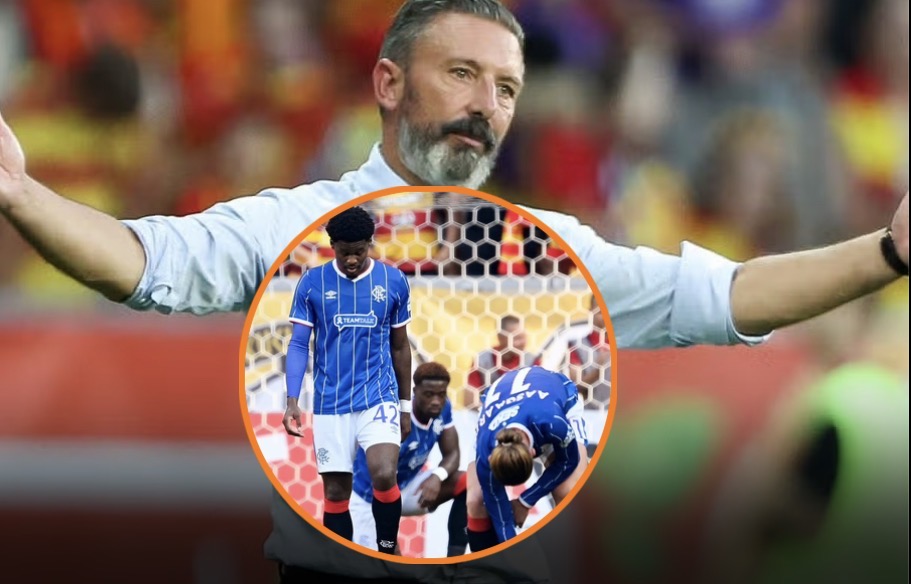

Rangers’ defeat to Jagiellonia Białystok has triggered fresh concerns around Ibrox, with what was initially viewed as a disappointing result now being described by many supporters and pundits as a significant setback in the club’s efforts to rebuild and restore stability. The loss has intensified scrutiny on the team, the management, and the overall direction of the club, creating a sense that Rangers may be facing a deeper crisis than many initially anticipated.
While one defeat alone does not define a season, the manner of the performance and the reaction that followed have raised serious questions. Rangers entered the match knowing that expectations were high. Supporters demanded a response after inconsistent displays, and many believed this fixture represented an opportunity to demonstrate progress under Derek McInnes. Instead, the result has left fans frustrated and worried about what lies ahead.
A DEFEAT THAT FELT BIGGER THAN ONE MATCH
Football clubs often experience disappointing results throughout a season. However, certain defeats carry greater significance because of the wider context surrounding them. Rangers’ loss to Jagiellonia Białystok appears to fall into that category.
The Polish side deserves considerable credit for their disciplined and organized performance. They executed their game plan effectively, capitalized on Rangers’ weaknesses, and demonstrated composure in key moments. Yet much of the discussion after the final whistle focused not on Jagiellonia’s strengths but on Rangers’ shortcomings.
Supporters expected a performance that would show confidence, authority, and tactical discipline. Instead, they witnessed a team that appeared vulnerable defensively, inconsistent in possession, and lacking the cutting edge required to dominate important European fixtures.
As a result, the defeat quickly became symbolic of wider concerns that have been building for some time.
GROWING PRESSURE ON DEREK MCINNES
When Derek McInnes accepted the challenge of managing Rangers, many supporters welcomed the appointment. His extensive experience in Scottish football, combined with his reputation for building competitive teams, made him an attractive candidate to guide the club forward.
However, management at Rangers comes with enormous expectations. Results are scrutinized more intensely than at almost any other club in Scotland. Every defeat becomes a major talking point, particularly when it occurs on the European stage.
Following the loss to Jagiellonia Białystok, questions have inevitably emerged regarding McInnes’ tactical approach, team selection, and ability to address recurring issues.
To his credit, McInnes has never been a manager who hides from criticism. He has consistently taken responsibility for poor performances while demanding higher standards from his players. Nevertheless, supporters will expect to see tangible improvements in the coming weeks.
The pressure is not yet overwhelming, but it is certainly increasing.
DEFENSIVE WEAKNESSES EXPOSED AGAIN
One of the most concerning aspects of the defeat was Rangers’ defensive performance.
Throughout the match, there were moments where communication appeared lacking, positioning was questionable, and decision-making under pressure fell below the standards expected at a club of Rangers’ stature.
Defensive stability is often the foundation of successful teams. When that foundation becomes unstable, confidence across the entire squad can suffer. Midfielders become hesitant, attackers feel compelled to track back more frequently, and the overall structure of the team begins to weaken.
Several players struggled to cope with the intensity and movement of Jagiellonia’s attackers. The result was a series of uncomfortable moments that ultimately contributed to Rangers’ downfall.
Supporters have expressed concern that similar defensive problems have surfaced on multiple occasions, suggesting the issue may be structural rather than isolated.
ATTACKING TALENT FAILS TO DELIVER
While defensive mistakes attracted significant attention, Rangers’ attacking players must also share responsibility for the disappointing outcome.
Opportunities were created throughout the match, but the final ball, finishing, and decision-making in advanced positions often lacked quality. Possession alone means little if it does not translate into goals.
Rangers have invested heavily in building a squad capable of competing at the highest level. Supporters expect their attacking players to make the difference in crucial matches. Against Jagiellonia Białystok, that difference never materialized.
There were moments when the team appeared capable of taking control, but promising attacks frequently broke down due to poor execution. Whether through rushed decisions or a lack of composure, Rangers repeatedly failed to capitalize on opportunities that could have changed the course of the match.
THE MOOD AMONG SUPPORTERS
The reaction from Rangers supporters has been intense.
Few fanbases in football are as passionate or demanding. Supporters expect commitment, quality, and consistent improvement. When those standards are not met, criticism is inevitable.
Social media platforms were flooded with reactions immediately after the defeat. Some fans directed frustration toward individual players, while others questioned tactical decisions and recruitment strategies.
A recurring theme among supporters has been concern over the club’s long-term direction. Many fear that repeated setbacks could undermine confidence and create additional challenges as the season progresses.
At the same time, there remains a belief among many supporters that the squad possesses enough quality to recover. The frustration stems largely from the feeling that the team is not currently performing to its potential.
EUROPEAN AMBITIONS TAKE A HIT
European competition has always been a vital part of Rangers’ identity.
The club’s supporters expect strong performances on the continental stage, and recent years have provided several memorable European campaigns. Those experiences raised expectations and reinforced the belief that Rangers should regularly compete against strong opposition.
The defeat to Jagiellonia Białystok therefore feels particularly damaging.
Beyond the immediate result, there are concerns about momentum, confidence, and reputation. European matches often provide opportunities to showcase progress and attract positive attention. Instead, Rangers now find themselves facing difficult questions.
Failure to respond effectively could have implications beyond this single campaign. Confidence within the squad, supporter morale, and perceptions of the club’s competitiveness could all be affected.
CAN THE SQUAD RESPOND?
The true measure of a team is often revealed after adversity.
Every successful club experiences setbacks. What separates strong teams from struggling ones is their ability to react positively when faced with disappointment.
Rangers now stand at a crucial crossroads.
The players must demonstrate resilience and character. They must show that the defeat was an isolated setback rather than evidence of deeper problems. Training-ground standards will need to improve, concentration levels must increase, and performances on the pitch must become more consistent.
Leadership within the dressing room will also be essential. Experienced players have a responsibility to guide younger teammates through difficult periods and ensure confidence does not collapse.
If Rangers can respond with a series of strong performances, the narrative surrounding the defeat may quickly change. However, additional disappointing results would only intensify concerns.
THE IMPORTANCE OF UNITY
One of the greatest dangers following a disappointing defeat is division.
When criticism increases, it can create tension between supporters, players, management, and club officials. Successful organizations avoid that trap by remaining united during difficult moments.
McInnes will undoubtedly emphasize the importance of collective responsibility. Blaming individual players rarely solves underlying issues. Instead, the entire squad must work together to address weaknesses and restore confidence.
Supporters also have a role to play. While criticism is part of football, backing the team during challenging periods can make a significant difference.
The coming weeks will reveal whether Rangers can maintain that unity or whether frustrations will continue to grow.
WHAT HAPPENS NEXT?
The response to this defeat could define Rangers’ season.
Upcoming fixtures now carry additional significance. Every performance will be examined closely, and every result will influence perceptions of the club’s progress.
McInnes and his coaching staff face several important decisions. Defensive organization must improve, attacking efficiency needs attention, and player confidence requires careful management.
The challenge is substantial, but not impossible.
Football seasons are rarely decided by a single result. Teams that ultimately achieve success often do so because they learn from difficult experiences and emerge stronger. Rangers must now demonstrate that they possess that ability.
CONCLUSION
Rangers’ defeat to Jagiellonia Białystok has become far more than a simple loss. It has amplified concerns surrounding performances, exposed weaknesses within the squad, and intensified scrutiny on the club’s direction.
The result has undoubtedly increased pressure on Derek McInnes and his players, while supporters are demanding clear signs of improvement. Defensive frailties, inconsistent attacking displays, and questions about confidence have all contributed to a growing sense of uncertainty.
Yet football remains a sport defined by response. Rangers still possess the opportunity to change the narrative, rebuild momentum, and prove that this setback was merely a temporary obstacle rather than evidence of a deeper crisis.
The coming weeks will be crucial. Whether this defeat marks the beginning of a prolonged period of struggle or serves as the catalyst for a strong recovery is a question only Rangers themselves can answer.