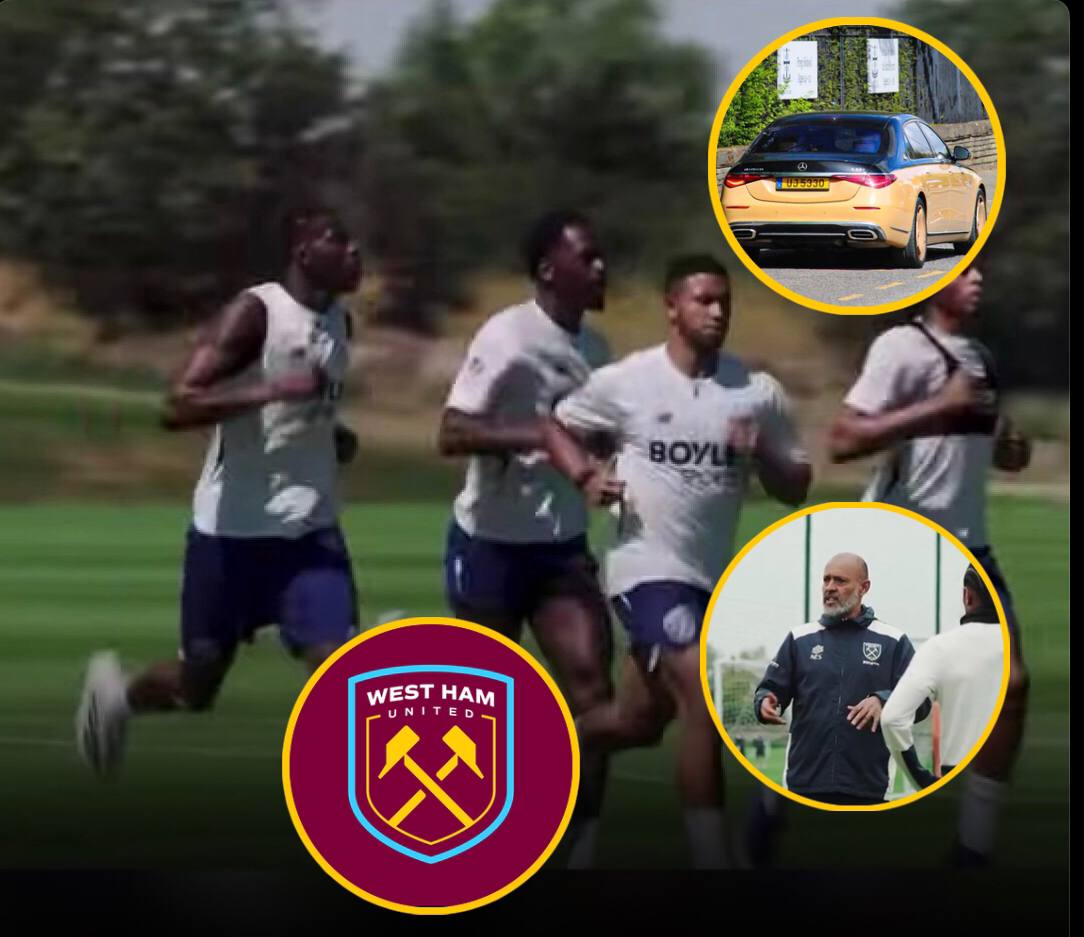
WEST HAM STAR DRIVES OUT OF TRAINING WITHOUT PERMISSION AFTER SLIGHT BURST UP WITH NUNO ESPIRITO SANTO

West Ham star drives out of Training Without Permissions after Slight Burst up with Nuno Espirito Santo
West Ham United, a club known for its resilience and proud traditions, has been rocked by a dramatic incident that unfolded during a routine training session. Reports confirm that a 28‑year‑old star player abruptly drove out of the training ground without permission, leaving teammates, coaches, and fans stunned.
Such behavior is rare at the professional level, where discipline and respect for the team environment are non‑negotiable. The incident has sparked heated debate about player professionalism, club culture, and the pressures of modern football.
The Incident
Witnesses at the training ground reported that the player left midway through drills, got into his car, and drove away without clearance from coaching staff. The abrupt departure disrupted the session and raised immediate concerns about the player’s commitment and emotional state.
While the reasons remain unclear, speculation ranges from disagreements with tactical instructions to personal frustrations. Regardless of motive, leaving training without permission is considered a serious breach of professional conduct.
Historical Context of Discipline at West Ham
West Ham has long prided itself on its “Academy of Football” ethos, producing disciplined and technically gifted players. From Bobby Moore to Mark Noble, the club has emphasized loyalty, respect, and collective responsibility.
Incidents of indiscipline have occurred in football history, but rarely do they involve senior stars at the peak of their careers. This makes the current situation particularly troubling, as the player in question is expected to be a role model for younger talents.
Impact on Team Morale
The timing of this walkout could not be worse. West Ham are navigating a crucial season in the Championship, aiming for promotion back to the Premier League. Team morale is fragile, and unity is essential.
When a senior figure disrupts training, it risks undermining the authority of the coaching staff and sending mixed signals to younger players. The squad’s cohesion depends on mutual respect, and any breach of discipline threatens to fracture that bond.
The Role of Senior Players
At 28, the star involved is in the prime of his career. Senior players are expected to embody professionalism, setting the tone for the rest of the squad. His actions therefore carry greater weight than those of a younger, less established teammate.
This incident highlights the delicate balance between individual frustrations and collective responsibility. While players may disagree with coaches or feel personal stress, walking out without permission crosses a line that clubs cannot ignore.
Aaron Wan‑Bissaka and the Example of Discipline
In the midst of this controversy, comparisons are being drawn with other professionals in the squad. Aaron Wan‑Bissaka, who joined West Ham after his spell at Manchester United, has been praised for his quiet determination and disciplined approach.
Wan‑Bissaka’s professionalism contrasts sharply with the current saga. Known for his defensive solidity and calm demeanor, he has rarely been involved in off‑field drama. His consistency serves as a reminder of the standards expected at West Ham.
By maintaining discipline and focus, Wan‑Bissaka exemplifies the kind of leadership the club desperately needs during turbulent times. His presence underscores how damaging it can be when another senior player fails to uphold similar standards.
Fan Reactions
Fans have taken to social media to express disappointment and frustration. Many supporters feel betrayed, as loyalty and commitment are values deeply ingrained in West Ham’s culture.
Some argue that the player’s actions reflect broader issues within the squad, while others believe it is an isolated incident. Either way, the walkout has become a talking point across fan forums, podcasts, and sports shows.
Media Coverage
The British press has seized on the story, with headlines emphasizing the shock and potential fallout. Pundits have debated whether the player should face fines, suspension, or even be transfer‑listed.
Media narratives often amplify such incidents, but in this case, the facts speak for themselves: driving out of training without permission is a serious breach of conduct. The coverage reflects the gravity of the situation and its potential impact on the club’s season.
Possible Consequences
The club now faces a difficult decision. Options include:
– Internal disciplinary action such as fines or warnings.
– Temporary suspension from training or matches.
– Transfer listing if the relationship between player and club deteriorates.
Each option carries risks. Punishment may restore discipline but could alienate the player further. Conversely, leniency might undermine authority and set a dangerous precedent.
Broader Implications for Modern Football
This incident also raises questions about the pressures faced by modern footballers. The demands of constant competition, media scrutiny, and fan expectations can weigh heavily on players.
While professionalism is non‑negotiable, clubs must also consider the mental and emotional well‑being of their athletes. Striking a balance between discipline and empathy is one of the great challenges of contemporary football management.
The walkout of a 28‑year‑old West Ham star, who drove out of training without permission, is more than just a disciplinary issue; it is a test of the club’s culture, leadership, and resilience.
As West Ham strive to return to the Premier League, they cannot afford distractions that undermine unity. Senior players must lead by example, and the contrast with professionals like Aaron Wan‑Bissaka highlights the importance of discipline and commitment.
The coming days will reveal how the club chooses to respond. Whatever the outcome, this incident will serve as a reminder that in football, as in life, respect for the team and adherence to collective responsibility are non‑negotiable.