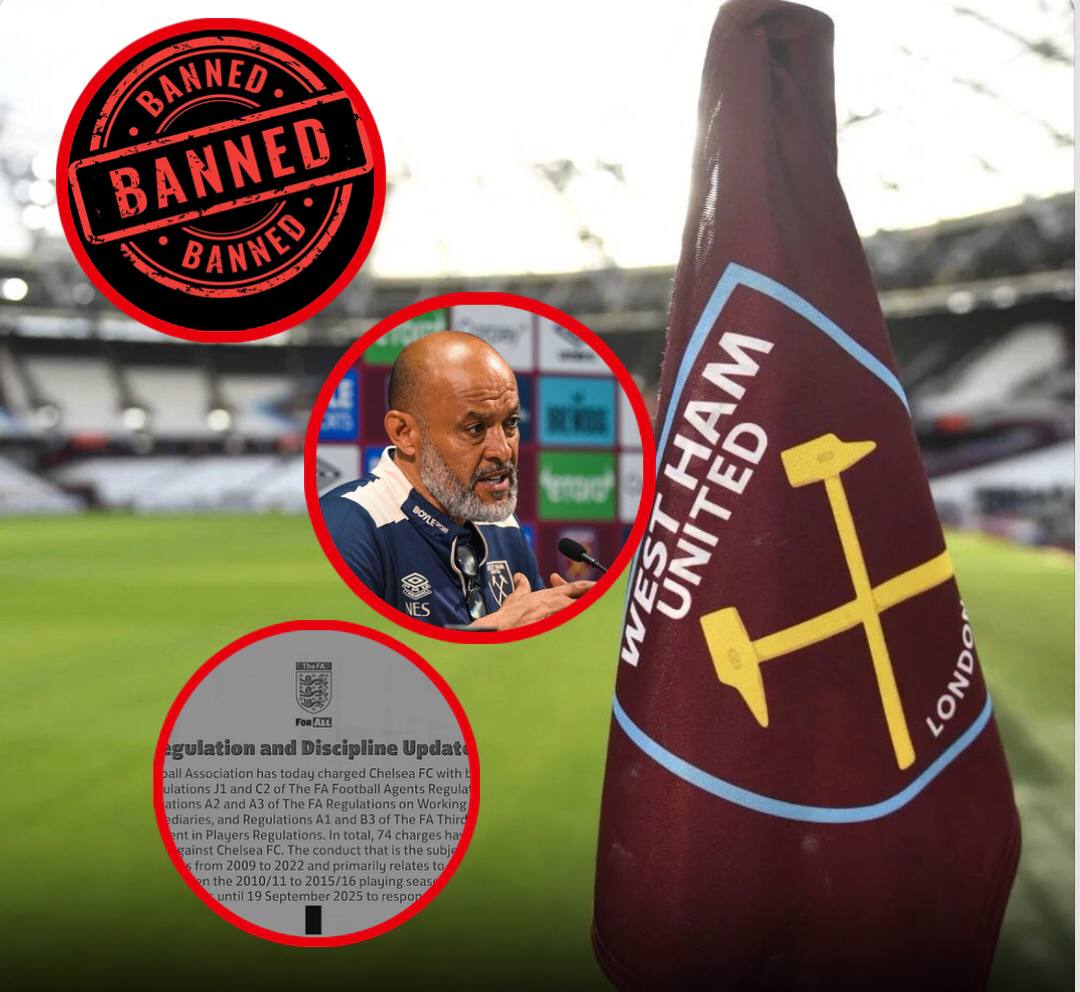

West Ham United Fined £10 Million and Handed Suspended Transfer Ban for FA Rule Breaches
The English Football Association (FA) has delivered one of its most significant disciplinary rulings in recent years, fining West Ham United £10 million and imposing a suspended transfer ban after the club was found guilty of breaching FA rules. This decision has sent shockwaves across the Premier League, not only because of the financial penalty but also due to the looming threat of a ban that could cripple the club’s ability to compete in the transfer market if further breaches occur.
The Incident That Sparked the Punishment
The case stems from a heated Premier League clash between Chelsea and West Ham United at Stamford Bridge on 31 January 2026. In stoppage time, tensions boiled over into a mass confrontation involving several players from both sides. West Ham’s defender Jean-Clair Todibo was shown a red card for violent conduct, while other players received cautions for unsporting behavior.
The FA charged both clubs under Rule E20.1, which obliges clubs to ensure their players and officials conduct themselves in a proper manner and refrain from violent or provocative behavior. This was not West Ham’s first offense; the club had previously been sanctioned in May 2025 following a similar incident against Nottingham Forest. The recurrence of misconduct played a decisive role in the severity of the punishment.
Breakdown of the FA’s Decision
– £10 Million Fine: The financial penalty is among the largest ever imposed by the FA for disciplinary breaches. It reflects both the seriousness of the incident and the club’s repeated failure to control its players.
– Suspended Transfer Ban: West Ham faces a suspended two-window transfer ban. This means the ban will only be enforced if the club commits further breaches within a specified timeframe. If triggered, West Ham would be unable to register new players for two consecutive transfer windows.
– FA’s Justification: The FA emphasized that the punishment was necessary to uphold discipline and deter clubs from repeated misconduct. The governing body highlighted West Ham’s prior offenses as evidence of systemic issues in player management and discipline.
Financial and Sporting Implications
Financial Impact
A £10 million fine is a substantial blow to West Ham’s finances. While Premier League clubs generate significant revenue from broadcasting rights, sponsorships, and matchday income, such a fine reduces flexibility in areas like player wages, stadium improvements, and youth development. For a club that has ambitions of consistently competing in Europe, this financial setback could limit investment in strengthening the squad.
Sporting Impact
The suspended transfer ban is arguably more damaging than the fine. If triggered, West Ham would be unable to sign new players for two transfer windows, leaving them vulnerable to injuries, loss of form, or departures. In a league as competitive as the Premier League, where rivals are constantly reinforcing their squads, such a restriction could derail West Ham’s ambitions of finishing in the top six or qualifying for European competitions.
Reputation and Club Image
Disciplinary sanctions of this magnitude inevitably tarnish a club’s reputation. West Ham, a club with a proud history and passionate fanbase, now faces scrutiny over its ability to instill discipline among players. The ruling raises questions about the leadership of manager Julen Lopetegui and the club’s internal culture. Sponsors and partners may also view the incident negatively, potentially affecting commercial relationships.
Comparisons to Other FA Disciplinary Cases
West Ham’s punishment is part of a broader trend of the FA cracking down on misconduct:
– Chelsea’s Case: Chelsea were fined and sanctioned for hidden agent payments in past transfers, highlighting the FA’s willingness to punish financial irregularities alongside on-pitch misconduct.
– Manchester United (2004): United were fined for failing to control their players during a heated clash with Arsenal, though the financial penalty was far smaller than West Ham’s.
– Leeds United (2007): Leeds faced disciplinary action for crowd trouble, showing that the FA’s remit extends beyond player behavior to overall club responsibility.
What makes West Ham’s case unique is the combination of a massive fine with a suspended transfer ban, a rare disciplinary tool that underscores the FA’s determination to enforce compliance.
The FA’s Broader Message
The ruling sends a clear message: repeated breaches will not be tolerated. The FA is seeking to restore integrity and discipline in English football, ensuring that clubs take responsibility for the conduct of their players. By imposing a suspended transfer ban, the FA is effectively placing West Ham on probation, warning them that any further misconduct will have severe consequences.
Risks for West Ham Going Forward
– Triggering the Ban: Any future incident of misconduct could activate the suspended ban, leaving West Ham unable to strengthen their squad.
– Player Discipline: The club must implement stricter codes of conduct and ensure players understand the consequences of misconduct.
– Competitive Pressure: Rivals may exploit West Ham’s potential transfer restrictions, especially in the race for European qualification.
– Fan Expectations: Supporters will demand accountability and improved discipline, putting pressure on management to deliver both results and integrity.
Potential Long-Term Effects
If West Ham fails to address these issues, the consequences could be long-lasting:
– Squad Weakness: Inability to sign players could lead to stagnation or decline in performance.
– Loss of Talent: Star players may seek moves to clubs with greater stability and fewer restrictions.
– Commercial Impact: Sponsors may hesitate to associate with a club repeatedly in trouble with the FA.
– Cultural Shift: The club may be forced to overhaul its disciplinary policies, potentially reshaping its identity.
West Ham United’s £10 million fine and suspended transfer ban mark a watershed moment in FA disciplinary enforcement. The ruling is not just about punishing misconduct but also about setting a precedent for accountability in English football. For West Ham, the challenge now lies in rebuilding trust, ensuring player discipline, and avoiding further breaches that could cripple their transfer strategy.
The club’s response in the coming months will determine whether this punishment becomes a turning point for positive change or a prelude to deeper struggles. One thing is clear: the FA has raised the stakes, and West Ham cannot afford another misstep.