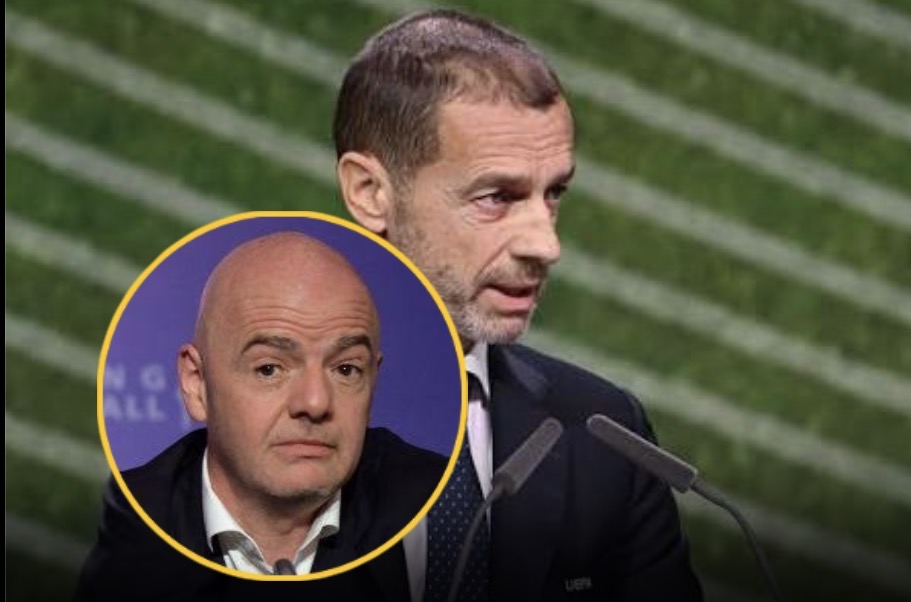

The world of football has been rocked by extraordinary reports suggesting that UEFA is considering drastic measures in response to a growing controversy surrounding FIFA President Gianni Infantino and the commercial direction of the FIFA World Cup. While football has experienced numerous political disputes and governance battles over the years, few have generated as much attention as the latest claims that some of Europe’s leading football authorities are prepared to discuss the possibility of a World Cup boycott if their concerns are not adequately addressed.
The controversy centers on accusations that FIFA’s leadership has placed commercial interests ahead of the traditional values of the game. Critics argue that the expansion of tournaments, increased commercialization, and the pursuit of lucrative broadcasting and sponsorship agreements have transformed football’s biggest competition into a business-driven enterprise. Supporters of FIFA, however, maintain that these decisions are essential for growing the sport globally and ensuring financial stability for football associations around the world.
At the heart of the debate is Gianni Infantino, one of the most influential figures in modern football. Since becoming FIFA President, Infantino has overseen a series of ambitious reforms designed to increase revenues, expand competitions, and bring football to new audiences. Under his leadership, the FIFA World Cup expanded to include more teams, prize money increased significantly, and FIFA pursued aggressive commercial strategies aimed at maximizing global engagement.
However, these moves have not been universally welcomed. Several football stakeholders across Europe have expressed concerns that the rapid commercialization of the sport could damage its competitive integrity and place excessive demands on players, clubs, and national teams. UEFA officials have repeatedly warned about fixture congestion, player welfare concerns, and what they perceive as FIFA’s growing willingness to make major decisions without sufficient consultation with continental confederations.
The alleged “sell-off controversy” has become a symbol of these broader tensions. According to critics, FIFA’s approach to commercial partnerships and tournament management reflects a shift away from football’s traditional foundations. Some observers believe that football authorities are increasingly prioritizing financial gains over sporting considerations, a claim that has fueled debate among fans, administrators, and former players alike.
The possibility of a UEFA-led World Cup boycott, even if only discussed behind closed doors, would represent one of the most dramatic developments in football governance history. UEFA member nations include many of the world’s strongest footballing countries, including England, Spain, Germany, France, Italy, Portugal, and the Netherlands. A tournament without these nations would fundamentally alter the competitive landscape of the World Cup and significantly reduce its global appeal.
Historically, football has experienced boycotts and political disputes, but rarely on a scale involving entire confederations. Previous controversies have often centered on individual nations or regional disagreements. The idea of Europe’s governing body collectively challenging FIFA would represent an unprecedented power struggle between two of the sport’s most influential organizations.
Supporters of UEFA’s position argue that drastic action may be necessary to force meaningful dialogue. They believe FIFA’s growing commercial ambitions require stronger oversight and greater collaboration with continental bodies. According to this view, a boycott threat could serve as leverage to ensure that future decisions are made through broader consultation rather than unilateral action.
On the other hand, critics of a boycott argue that such a move would ultimately hurt players and supporters more than administrators. For many footballers, representing their country at the World Cup is the pinnacle of their careers. Denying players the opportunity to compete on the sport’s biggest stage could create significant backlash from athletes, fans, and national associations.
The controversy also highlights the increasingly complex relationship between FIFA and UEFA. While both organizations share the goal of promoting football, their priorities do not always align. FIFA operates on a global scale and seeks to grow the game in emerging markets, while UEFA represents some of the most established football nations and competitions in the world.
Over the years, disagreements between the two organizations have emerged over tournament scheduling, international calendars, club competitions, and revenue distribution. These disputes have often been resolved through negotiation, but tensions have occasionally spilled into public view. The current situation is viewed by many analysts as another chapter in a long-running struggle over the future direction of the sport.
Financial considerations play a major role in the debate. The World Cup generates billions of dollars in revenue through broadcasting rights, sponsorship agreements, ticket sales, and commercial partnerships. These funds are distributed throughout global football and support development projects in countries across multiple continents. FIFA argues that increased revenues allow the organization to invest more heavily in infrastructure, youth development, women’s football, and grassroots programs.
Critics, however, question whether financial growth should remain the primary objective. They argue that football’s popularity was built on sporting excellence, competitive fairness, and cultural significance rather than commercial expansion alone. From their perspective, preserving these values is essential to maintaining the integrity of the game.
Players themselves may find themselves caught in the middle of the dispute. Many footballers have already voiced concerns about increasingly crowded schedules. Club seasons continue to expand, international competitions have grown larger, and commercial obligations place additional demands on athletes. Some player representatives believe football’s governing bodies must do more to protect player welfare and avoid burnout.
Fans have reacted with a mixture of concern and frustration. Supporters across Europe view the World Cup as one of the most cherished events in the sporting calendar. The possibility of major nations being absent from the tournament would be deeply disappointing for millions of football enthusiasts around the world. At the same time, many fans share concerns about the commercialization of football and support efforts to preserve the traditions that make the sport unique.
Media coverage of the controversy has intensified speculation about what could happen next. Some reports suggest that discussions remain at an early stage and that no formal boycott decision has been made. Others believe the issue could become a significant topic at future meetings involving football’s major governing bodies.
For Gianni Infantino, the situation represents another major challenge during a presidency that has often generated both praise and criticism. Supporters credit him with expanding football’s global reach, increasing revenues, and strengthening FIFA’s financial position. Critics argue that some of his reforms have been implemented too aggressively and without sufficient consideration for their long-term impact.
The coming months could prove crucial in determining whether tensions escalate or are resolved through negotiation. Football’s history suggests that compromise is often the preferred outcome when major stakeholders clash. FIFA and UEFA both have strong incentives to maintain cooperation, given their shared responsibility for organizing and developing the world’s most popular sport.
If meaningful discussions take place, there may be opportunities to address concerns related to tournament expansion, scheduling, revenue allocation, and governance structures. Such negotiations could help reduce tensions while ensuring that football continues to evolve in a way that balances commercial success with sporting integrity.
Ultimately, the reported possibility of a UEFA World Cup boycott underscores the challenges facing modern football. The sport has become a global business worth billions of dollars, yet it remains deeply rooted in tradition, passion, and community identity. Balancing these competing priorities is one of the greatest responsibilities facing football’s leaders today.
Whether the controversy leads to significant reforms, renewed cooperation, or further confrontation remains to be seen. What is certain is that the debate has reignited important questions about who controls football’s future and how the game should be governed in an increasingly commercialized era.
For now, fans, players, clubs, and administrators around the world will be watching closely as events unfold. The stakes are enormous, and the outcome could shape the direction of international football for years to come. Regardless of where individuals stand on the issue, the controversy has highlighted the importance of transparency, collaboration, and accountability in ensuring that football remains true to the values that have made it the world’s most beloved sport.