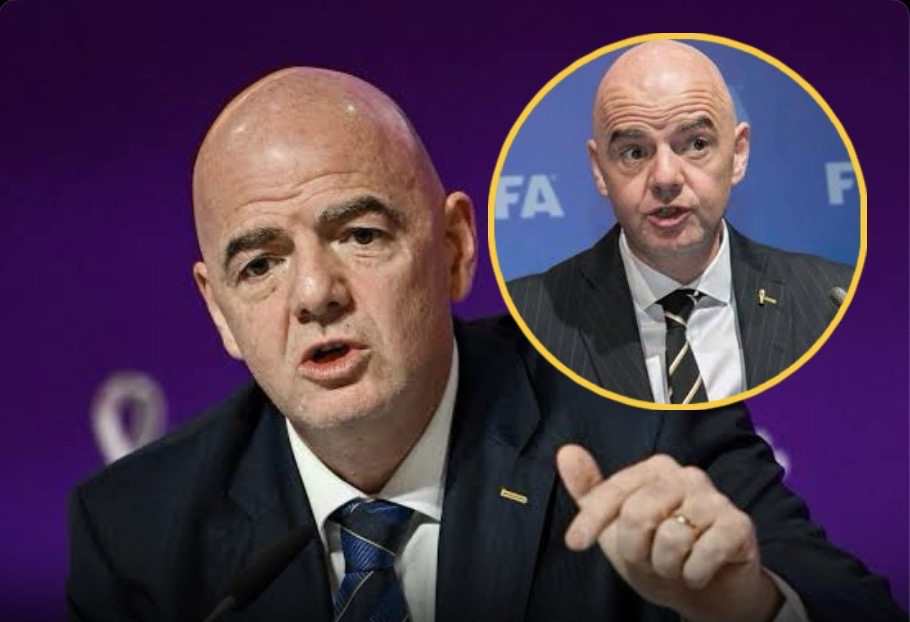
FIFA BREAK LAWS OF FOOTBALL WITH HUGELY CONTROVERSIAL WORLD CUP FINAL DECISION

The FIFA World Cup has always been a tournament that captures the imagination of billions. Every four years, the world’s best players and nations compete for football’s most prestigious prize, creating moments that live forever in sporting history. Yet alongside the unforgettable goals, dramatic comebacks, and emotional celebrations, there have also been moments of controversy that spark fierce debate among fans, players, managers, and pundits.
In recent days, discussions have intensified following claims that FIFA has effectively “broken the laws of football” with a highly controversial decision regarding the World Cup final. Whether the criticism is entirely justified or not, the debate has once again placed FIFA under the spotlight and raised questions about the balance between innovation, fairness, and tradition in the modern game.
Why the Decision Has Sparked Such Strong Reactions
Football supporters are famously protective of the traditions and laws that govern the sport. While changes have always been introduced over time, many fans believe that certain principles should remain untouched.
When news emerged that FIFA had approved a decision affecting the World Cup final that some observers felt conflicted with the spirit—or interpretation—of football’s laws, reactions were immediate.
Social media platforms exploded with discussion.
Former players weighed in with differing opinions.
Television pundits questioned whether FIFA had overstepped its authority.
Supporters of various nations argued passionately for and against the move.
What makes the controversy particularly significant is that it concerns the World Cup final itself—the biggest match in international football.
Every decision made around the final is magnified because of the enormous stakes involved.
FIFA’s Role in Governing the Game
To understand the controversy, it is important to recognize FIFA’s position within world football.
FIFA is responsible for organizing the World Cup and overseeing international football competitions.
However, the actual Laws of the Game are written and maintained by the International Football Association Board (IFAB), the body responsible for defining football’s official rulebook.
This distinction is important because FIFA can introduce competition-specific regulations, tournament procedures, and operational guidelines, but it cannot simply rewrite the Laws of the Game whenever it chooses.
Critics of the recent decision argue that FIFA has crossed a line by creating a situation that appears inconsistent with established football principles.
Supporters of FIFA, meanwhile, insist that the organization has acted within its regulatory powers and that the changes are fully compliant with tournament regulations.
The Tradition of the World Cup Final
Historically, the World Cup final has been treated differently from other matches because of its immense significance.
The final represents the culmination of years of preparation, qualification campaigns, and weeks of intense competition.
As a result, football authorities have traditionally been cautious when introducing new procedures that could affect the outcome of such an important fixture.
Many fans believe the final should be decided solely by the players on the pitch rather than by administrative decisions, experimental regulations, or controversial interpretations of existing rules.
This belief helps explain why any perceived deviation from football’s traditional framework generates such intense scrutiny.
The Growing Influence of Technology
Much of modern football’s controversy revolves around technology.
The introduction of Video Assistant Referees (VAR) transformed the game.
Supporters argue that VAR has reduced clear refereeing mistakes and improved accuracy.
Critics counter that it has disrupted the flow of matches and introduced new forms of controversy.
Goal-line technology, semi-automated offside systems, and enhanced tracking technology have all become major parts of modern football.
FIFA has generally positioned itself as a supporter of technological innovation.
While these advancements have undoubtedly improved certain aspects of officiating, they have also raised concerns about whether football is becoming overly dependent on technology.
For some fans, the latest World Cup final controversy represents another example of FIFA prioritizing innovation over tradition.
The Question of Sporting Integrity
One of the most common criticisms directed at FIFA concerns sporting integrity.
At the highest level of football, fairness must remain the overriding priority.
Any decision that appears to favor one team, alter competitive balance, or create unequal conditions will inevitably attract criticism.
Opponents of FIFA’s decision argue that the organization risks undermining confidence in the competition.
They believe that even the perception of unfairness can damage the credibility of the tournament.
Supporters of the decision disagree.
They argue that FIFA’s primary responsibility is to ensure the smooth operation of the competition and that difficult decisions are sometimes necessary.
The debate ultimately highlights the challenge of governing a sport followed by billions of people with differing opinions and expectations.
Why Fans Are Calling It “Breaking the Laws”
The phrase “breaking the laws of football” is, in many cases, more rhetorical than literal.
Many critics are not claiming that FIFA has directly violated the official rulebook.
Instead, they argue that the decision contradicts the spirit and traditions upon which football has been built.
Football has always relied on a combination of written laws and unwritten principles.
The written laws define what is allowed.
The spirit of the game influences how those laws are interpreted and applied.
When supporters accuse FIFA of breaking football’s laws, they are often expressing concern that an administrative decision has undermined those longstanding principles.
Former Players Enter the Debate
Several former internationals and football analysts have reportedly voiced concerns about the direction football governance is taking.
Many of these figures have stressed that the World Cup final should remain as free from controversy as possible.
Some argue that introducing contentious procedures risks distracting attention from the players.
Others believe that football must continue evolving in order to remain fair and relevant.
This split reflects a broader debate within the sport.
Should football embrace every available innovation?
Or should authorities protect the traditions that have made the game the world’s most popular sport?
There is no simple answer.
FIFA Defends Its Position
Despite the criticism, FIFA has consistently maintained that its decisions are made with the best interests of the game in mind.
The organization frequently points to extensive consultation processes, expert analysis, and regulatory reviews before implementing major changes.
FIFA officials often argue that football must adapt to changing circumstances.
The game today is faster, more global, and more technologically advanced than ever before.
Managing a tournament involving dozens of teams, thousands of personnel, and billions of viewers requires complex planning and decision-making.
From FIFA’s perspective, innovation is not an option—it is a necessity.
Could the Controversy Affect the Final?
One of the biggest concerns is whether the controversy will overshadow the World Cup final itself.
Players generally prefer to focus on football rather than administrative disputes.
Managers often attempt to shield their squads from external distractions.
However, in the modern media environment, major controversies are difficult to avoid.
Questions from journalists, debates on television, and endless social media discussion can create additional pressure.
If the final itself contains controversial incidents, scrutiny of FIFA’s decision could intensify even further.
Conversely, a smooth and successful final might help reduce criticism over time.
Lessons From Previous World Cups
This is far from the first time FIFA has faced controversy during a World Cup.
Throughout the tournament’s history, disputes have emerged over refereeing decisions, disciplinary rulings, scheduling arrangements, and competition formats.
Many controversies initially appeared enormous but eventually faded as new tournaments and new storylines emerged.
Others left a lasting impact and resulted in significant reforms.
The introduction of goal-line technology, for example, was partly driven by previous controversial incidents.
Similarly, VAR emerged after years of debate about officiating standards.
History suggests that major controversies often become catalysts for change.
The Broader Debate About Football’s Future
Beyond the immediate controversy lies a much larger question.
What should football look like in the future?
Traditionalists want to preserve the simplicity and authenticity that made football globally beloved.
Reformers argue that the game must continue evolving to address modern challenges.
FIFA frequently finds itself caught between these competing visions.
Every major decision is judged not only on its immediate impact but also on what it says about football’s future direction.
The latest World Cup final controversy is therefore about more than one specific ruling.
It is about the ongoing struggle to balance innovation with tradition.
Conclusion
The claim that FIFA has “broken the laws of football” with a controversial World Cup final decision has generated intense debate across the football world.
Whether supporters agree or disagree with the criticism, the controversy highlights the enormous scrutiny that accompanies every major FIFA decision.
For critics, the issue is about preserving football’s traditions and ensuring that the World Cup final remains a pure sporting contest.
For FIFA, it is about managing a global event in an increasingly complex and technologically advanced era.
Ultimately, the players will determine the outcome on the pitch.
Yet the discussion surrounding FIFA’s decision serves as a reminder that football is about more than goals and trophies. It is also about values, traditions, and the constant challenge of deciding how the world’s most popular sport should evolve.
As the World Cup final approaches, one thing is certain: the controversy has ensured that FIFA’s actions will be examined more closely than ever before, and the debate over the future of football is unlikely to disappear anytime soon.