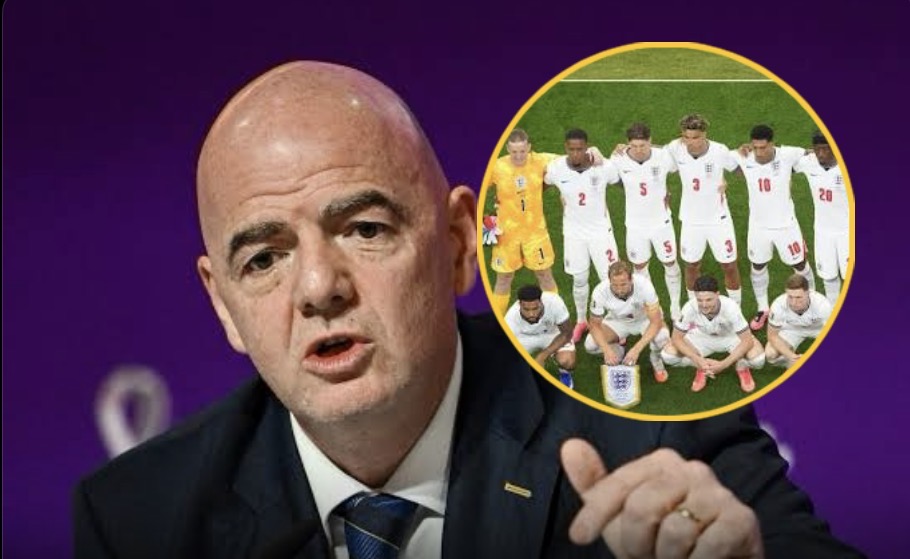
FIFA ISSUES UNPRECEDENTED STATEMENT ON ENGLAND AFTER LOSS TO ARGENTINA IN AN UNPRECEDENTED FIRST IN ITS HISTORY

England’s dream of lifting the 2026 FIFA World Cup came to a heartbreaking end after a dramatic 2-1 defeat to Argentina in the semi-finals. The match, played in front of a global audience, was filled with tension, controversy, emotion, and moments of brilliance. However, it was not only the result that dominated headlines in the hours that followed. Instead, football fans around the world were stunned when FIFA released what many described as an unprecedented statement regarding England’s performance, conduct, and role in the tournament.
The governing body’s comments immediately sparked debate across the football world. Pundits, former players, supporters, and media outlets began discussing the significance of FIFA’s remarks, with many describing the move as highly unusual. FIFA traditionally avoids making direct assessments of specific national teams outside official disciplinary matters, making the statement particularly noteworthy.
England’s Journey to the Semi-Finals
Before their clash against Argentina, England had enjoyed an impressive World Cup campaign. Under the leadership of Thomas Tuchel, the Three Lions had demonstrated resilience, tactical discipline, and attacking quality throughout the tournament.
England successfully navigated a difficult route to the semi-finals. Victories over DR Congo, Mexico, and Norway showcased their ability to overcome different tactical challenges. The squad appeared united, and many observers believed this could finally be the tournament where England ended decades of World Cup disappointment.
Key players such as Harry Kane, Jude Bellingham, Bukayo Saka, Declan Rice, and Phil Foden played crucial roles throughout the competition. England’s balance between experienced leaders and emerging stars gave supporters genuine hope that a second World Cup title was within reach.
As the semi-final against Argentina approached, anticipation reached extraordinary levels. The fixture represented one of international football’s greatest rivalries, carrying decades of history and emotion.
A Semi-Final Full of Drama
The encounter between England and Argentina lived up to expectations.
Argentina started brightly, controlling possession and creating early opportunities. England responded well and gradually settled into the match. Both teams displayed the quality that had taken them to the final four.
Argentina eventually broke the deadlock through a well-worked attacking move that exposed England’s defensive structure. The South Americans demonstrated why many experts regarded them as one of the tournament favourites.
England fought back admirably and found an equaliser through a determined attacking sequence that reignited belief among supporters. For a brief period, momentum appeared to swing in England’s favour.
However, Argentina delivered the decisive blow in the latter stages of the contest. A clinical finish secured a 2-1 victory and booked their place in the World Cup final.
The final whistle triggered contrasting emotions. Argentina celebrated another famous achievement, while England players collapsed to the ground in disappointment.
FIFA’s Historic Response
Ordinarily, FIFA’s post-match communications focus on factual reporting, disciplinary updates, tournament statistics, or organisational matters.
This time, however, FIFA issued a statement that directly addressed England’s contribution to the tournament and the manner in which they had represented themselves on football’s biggest stage.
The statement reportedly praised England’s commitment, competitiveness, and sporting conduct while also acknowledging the disappointment of falling short in the semi-finals. What made the announcement remarkable was the level of detail and recognition included.
Observers quickly noted that FIFA rarely singles out eliminated teams in such a manner. The governing body typically reserves extensive commentary for champions, finalists, or major disciplinary incidents.
For that reason, many analysts described the communication as unprecedented.
Why the Statement Generated So Much Attention
Several factors contributed to the widespread reaction.
First, England remains one of the most followed football nations in the world. Any official comment involving the Three Lions naturally attracts enormous attention.
Second, the timing was unusual. The statement arrived shortly after England’s elimination, when emotions among players and supporters were still raw.
Third, FIFA’s tone appeared different from previous communications. Rather than simply acknowledging the result, the organisation reflected on England’s broader impact throughout the tournament.
Many football commentators interpreted the message as recognition of England’s growth under Thomas Tuchel and the positive image the squad projected during the World Cup.
Others questioned whether FIFA should be issuing statements of that nature at all, arguing that governing bodies should remain neutral regarding individual national teams.
Thomas Tuchel’s Influence
Much of the discussion surrounding England’s campaign has centred on Thomas Tuchel.
Since taking charge, the German coach has worked to create a more tactically flexible England side. Throughout the World Cup, England demonstrated an ability to adapt to different opponents while maintaining their attacking threat.
Tuchel’s calm leadership style was widely praised. Even after the defeat to Argentina, he spoke with dignity and perspective, emphasizing pride in his players rather than focusing solely on disappointment.
Many experts believe FIFA’s comments indirectly reflected recognition of the progress England had made under his guidance.
The team’s performances suggested a clear tactical identity, something critics had occasionally argued was missing from previous England tournaments.
Reaction from Players
England players responded to the defeat with a mixture of sadness and determination.
Captain Harry Kane expressed pride in the squad’s efforts while acknowledging that losing a World Cup semi-final would always be painful.
Jude Bellingham, one of England’s standout performers throughout the tournament, spoke about using the experience as motivation for future competitions.
Several players also thanked supporters for their unwavering backing during the tournament. Images of fans applauding the team despite the defeat became symbolic of the connection between the squad and its supporters.
The positive reaction from many England fans may have contributed to the wider narrative that the team had earned respect despite falling short of the final.
Argentina’s Perspective
While much attention focused on England and FIFA’s statement, Argentina deserved enormous credit for their achievement.
The South Americans displayed composure, quality, and experience in crucial moments. Their ability to handle pressure and capitalize on key opportunities ultimately made the difference.
Argentina’s victory secured their place in the World Cup final, where they would continue their pursuit of another global title.
Players and coaching staff celebrated a hard-earned triumph against one of the strongest teams in the tournament.
Many Argentine analysts noted that defeating England required one of their most complete performances of the World Cup.
Debate Across the Football World
The FIFA statement sparked intense debate.
Supporters of England welcomed the recognition, arguing that the team had represented the sport positively and deserved acknowledgment for an impressive tournament.
Critics, however, questioned whether FIFA should publicly highlight one eliminated team over others.
Former players offered differing opinions. Some described the move as a positive gesture that reflected football’s broader values. Others argued that official governing bodies should avoid creating perceptions of favouritism.
Social media discussions intensified as fans from various countries weighed in on the issue.
Regardless of individual opinions, the statement succeeded in generating global conversation—something rarely achieved by post-match communications.
What Comes Next for England?
Despite the disappointment, England’s future appears bright.
The squad contains a strong blend of youth and experience. Players such as Jude Bellingham, Bukayo Saka, Cole Palmer, and several emerging talents are expected to remain central figures for years to come.
Meanwhile, experienced leaders like Harry Kane continue to provide invaluable guidance both on and off the pitch.
The immediate focus will shift toward the third-place playoff, where England will have an opportunity to end the tournament on a positive note.
Beyond that, attention will turn to future international competitions and the continued development of a squad that many believe is capable of winning major honours.
A Defining Moment
Whether one agrees with FIFA’s statement or not, its impact is undeniable.
The governing body’s comments transformed an already significant football story into a wider discussion about recognition, sportsmanship, and the role of football’s governing institutions.
England may have fallen short of the World Cup final, but their campaign left a lasting impression on supporters and observers around the world.
The defeat to Argentina was painful, yet it also highlighted the progress the team has made and the potential that remains within the squad.
As the football world continues to debate FIFA’s unprecedented statement, one thing is clear: England’s 2026 World Cup journey will be remembered not only for what happened on the pitch but also for the extraordinary reaction it generated off it.
For England, the challenge now is to use the disappointment as fuel for future success. For FIFA, the statement has opened a new conversation about how football’s governing body communicates with teams and supporters.
And for fans everywhere, the story serves as another reminder that the World Cup is about far more than results alone. It is about moments, emotions, narratives, and the enduring power of football to unite and inspire millions across the globe.