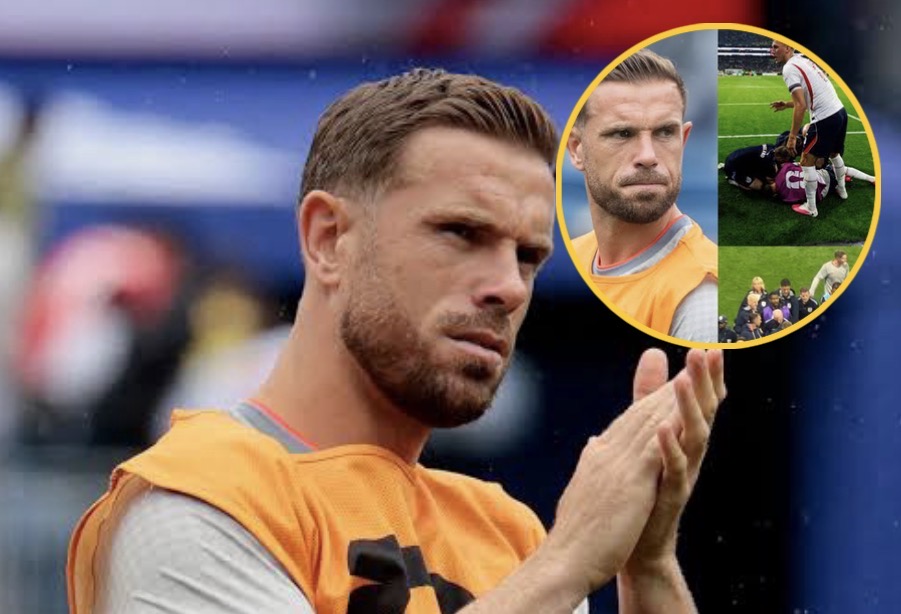
FIFA RULEBOOK REVEALS WHETHER ENGLAND CAN REPLACE JORDAN HENDERSON AHEAD OF CRUCIAL NORWAY CLASH

As England prepare for a pivotal World Cup quarter-final showdown against Norway, fresh questions have emerged regarding the status of veteran midfielder Jordan Henderson and whether the Three Lions would be permitted to bring in a replacement should he become unavailable.
The issue has sparked widespread debate among supporters, particularly given the importance of the upcoming fixture. With a place in the semi-finals at stake, every squad decision could have significant consequences for England’s hopes of lifting the World Cup trophy.
While fans have speculated about potential replacements and emergency call-ups, FIFA’s regulations provide a clear framework regarding when teams can and cannot alter their tournament squads. Understanding those rules is essential to determining whether England would be allowed to replace Henderson before facing Norway.
Henderson’s Importance to England
Jordan Henderson remains one of the most experienced figures within the England setup.
Having represented his country across multiple major tournaments, the midfielder brings leadership, composure, and tactical intelligence to the squad. Even when not starting every match, Henderson’s influence inside the dressing room has often been highlighted by teammates and coaches alike.
His experience becomes particularly valuable during the knockout stages of major tournaments, where pressure reaches its highest levels and fine margins often determine success or failure.
For that reason, any concern surrounding Henderson’s availability naturally attracts attention.
Whether due to injury, fitness concerns, suspension, or other unforeseen circumstances, the prospect of losing such an experienced player ahead of a World Cup quarter-final would represent a significant challenge for England manager Thomas Tuchel.
Why Fans Are Asking About Replacements
The discussion surrounding possible replacements stems from the unique nature of tournament football.
Unlike club competitions, national teams operate with fixed squads that are submitted before the tournament begins. Once those squads are finalized, changes become extremely restricted.
As England move deeper into the competition, supporters have begun asking whether an unavailable player can simply be replaced by someone outside the current squad.
Could England call up another midfielder?
Could a player who narrowly missed the final squad receive a surprise invitation?
Could an emergency replacement be approved by FIFA?
These questions have become increasingly common as speculation continues regarding Henderson’s situation.
What FIFA Regulations Actually Say
According to FIFA tournament regulations, teams are generally not permitted to replace players after the competition has officially begun.
Before the World Cup starts, national associations may replace players who suffer serious injuries or illnesses, provided specific medical requirements are met and FIFA approves the request.
However, once the tournament is underway, the rules become significantly stricter.
In most circumstances, a player who becomes unavailable after the start of the competition cannot simply be replaced by an individual from outside the registered squad.
This rule exists to preserve the integrity of the tournament and ensure all participating nations operate under the same conditions.
As a result, England would typically need to rely on players already included in their World Cup squad.
The Difference Between Pre-Tournament and In-Tournament Replacements
One of the most misunderstood aspects of FIFA regulations concerns the distinction between injuries occurring before the tournament and those occurring during it.
Before the opening match, teams can request approval to replace seriously injured players.
Medical evidence must usually be provided, and FIFA’s medical experts may review the case before granting permission.
Once the tournament begins, however, those replacement provisions largely disappear.
This means that if a player suffers an injury during the competition itself, national teams generally cannot bring in a new player from outside the squad list.
The affected team must continue using the remaining players available.
For England, that distinction is crucial.
If Henderson’s issue emerged after the tournament had started, FIFA regulations would likely prevent England from introducing a replacement.
England’s Existing Midfield Options
While Henderson’s experience is difficult to replicate, England possess considerable depth in midfield.
One reason FIFA maintains strict squad regulations is because participating nations are expected to have enough players to cope with injuries, suspensions, and unexpected setbacks.
England’s squad contains several midfielders capable of stepping into larger roles if required.
The Three Lions have spent years building one of the strongest talent pools in international football, and Tuchel has repeatedly emphasized the importance of squad depth during major tournaments.
Although losing a player of Henderson’s stature would be disappointing, England would still retain multiple options capable of competing at the highest level.
Thomas Tuchel’s Perspective
Tuchel has consistently stressed the importance of adaptability.
Throughout his managerial career, the German coach has demonstrated a willingness to alter formations, tactical systems, and personnel when circumstances demand.
If Henderson were unavailable, Tuchel would almost certainly focus on internal solutions rather than external possibilities.
His attention would turn toward selecting the best combination from the players already at his disposal.
Managers entering major tournaments understand that unforeseen setbacks are inevitable.
Whether through injuries, suspensions, or fitness concerns, successful teams must find ways to overcome adversity without relying on reinforcements from outside the squad.
Why FIFA Restricts Mid-Tournament Replacements
Many supporters wonder why FIFA does not simply allow teams to replace injured players at any stage of the competition.
The answer lies in maintaining competitive balance.
If teams were allowed unrestricted replacements throughout the tournament, wealthier football associations with extensive player pools could gain significant advantages.
The current rules encourage nations to carefully select balanced squads capable of handling various scenarios.
They also ensure fairness by preventing teams from constantly refreshing their roster based on evolving circumstances.
While the regulations can seem harsh when injuries occur, FIFA believes they help preserve the integrity and consistency of the competition.
Could There Be Any Exceptions?
Although FIFA regulations are generally strict, extraordinary situations can occasionally prompt special consideration.
Historically, however, such exceptions have been extremely rare.
They typically involve unprecedented circumstances affecting multiple players or broader tournament operations rather than individual injuries.
For a single player issue involving Henderson, the likelihood of England receiving permission to add a replacement from outside the registered squad would be extremely low.
Unless FIFA introduced a unique ruling—which would itself generate significant controversy—England would be expected to continue with the squad already selected.
Focus Shifts to Norway
Regardless of the speculation surrounding Henderson, England’s primary focus remains the quarter-final against Norway.
The Scandinavian side have become one of the surprise stories of the tournament after eliminating several highly regarded opponents.
Their impressive victory over Brazil demonstrated both tactical discipline and mental resilience.
Norway arrive with confidence, momentum, and belief that they can continue their remarkable run.
England therefore face a demanding challenge regardless of any squad concerns.
Tuchel’s staff will be concentrating on tactical preparation rather than hypothetical replacement scenarios.
The Bigger Picture
Major tournaments often test a team’s depth as much as its star power.
History is filled with examples of nations overcoming injuries to key players and still achieving success.
In some cases, unexpected absences have even provided opportunities for emerging stars to establish themselves on the biggest stage.
England will hope that, regardless of Henderson’s status, their collective strength can carry them through the decisive stages of the competition.
The hallmark of championship-winning teams is often their ability to adapt when circumstances become difficult.
If England are to lift the World Cup trophy, they may need to demonstrate precisely that quality.
What This Means for England
The reality is straightforward.
Under standard FIFA World Cup regulations, England would not be permitted to replace Jordan Henderson with a player from outside their registered squad once the tournament is underway.
Any absence would therefore need to be managed internally through tactical adjustments and alternative selections from the existing squad.
While supporters may continue debating hypothetical replacements, the rules leave little room for flexibility.
England’s fate will depend on the players already assembled within Tuchel’s squad.
Conclusion
The question of whether England can replace Jordan Henderson ahead of the crucial quarter-final against Norway has generated considerable discussion among fans. However, FIFA’s regulations provide a clear answer.
While player replacements can sometimes be approved before a tournament begins in cases of serious injury or illness, the rules become far more restrictive once the competition is underway. In normal circumstances, teams are not allowed to call up new players to replace unavailable squad members during the tournament.
As a result, if Henderson cannot feature against Norway, England will need to rely on the depth, quality, and versatility already present within their World Cup squad.
With a semi-final place on the line and expectations continuing to rise, Thomas Tuchel’s side must now focus on the challenge ahead. Whether Henderson plays or not, England’s World Cup dream remains alive—but overcoming Norway will require every available player to step up when it matters most.