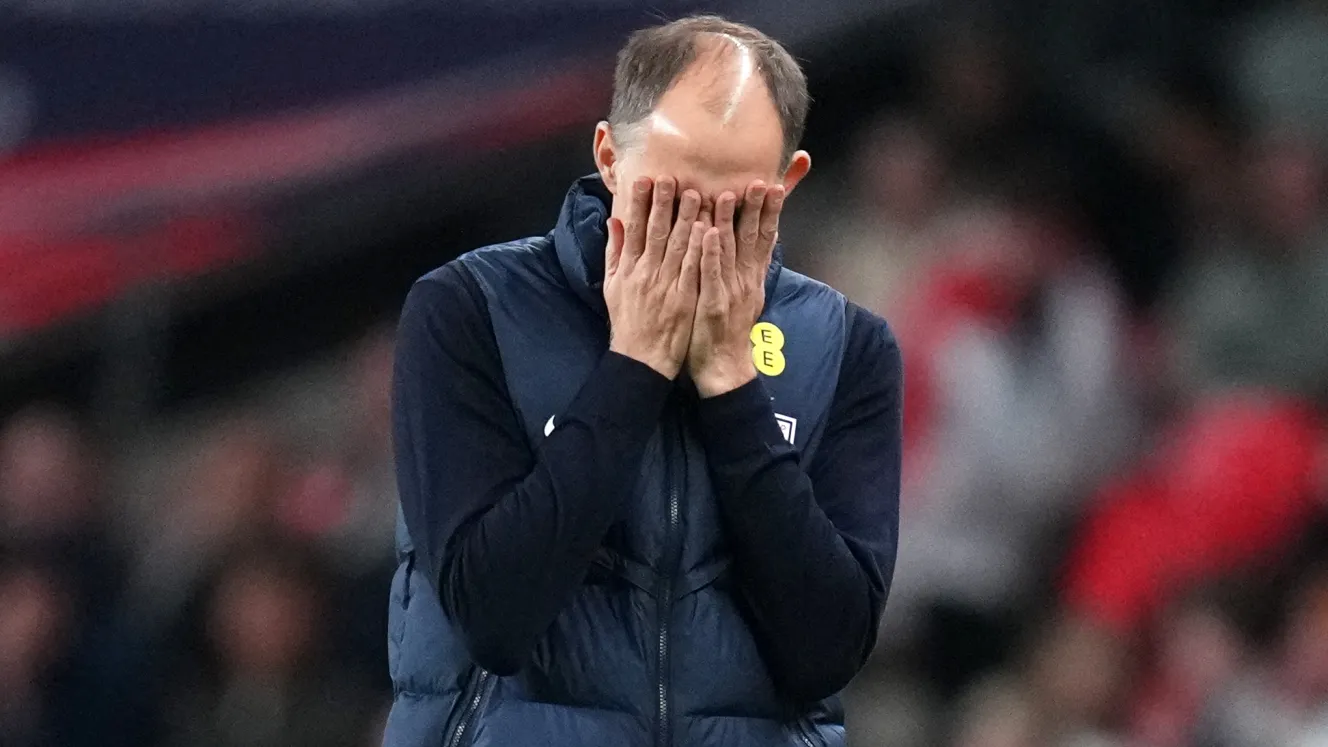
DISASTER FOR ENGLAND AS THREE PLAYERS HAVE BEEN STRUCK BY HEAT ILLNESS DUE TO EXTREME HOT WEATHER IN KANSAS CITY

DISASTER FOR ENGLAND AS THREE PLAYERS ARE STRUCK BY HEAT ILLNESS IN KANSAS CITY
Extreme weather, disrupted preparations, and rising physiological risks threaten England’s World Cup campaign.
Introduction: A World Cup Overshadowed by Climate Extremes
The 2026 World Cup was always expected to be a tournament of unprecedented scale, spanning three nations and dozens of cities. What few anticipated, however, was the extent to which climate volatility would shape the competition. For England, the warning signs appeared early: tornado alerts, violent thunderstorms, and suffocating heat waves repeatedly disrupted their training base in Kansas City. Now escalated into a genuine crisis.
Three England players have suffered heat‑related illness during training sessions in Kansas City, raising urgent questions about player safety, tournament scheduling, and the broader challenge of competing in extreme environmental conditions. As temperatures soared past 105°F (41°C), England’s carefully planned acclimatization strategy was pushed to its limits—and, in several cases, beyond.
This article examines the unfolding situation in Kansas City, the scientific and tactical implications of heat illness, the affected players, and what this means for England’s pursuit of World Cup glory.
Kansas City: England’s Base Turns Hostile
Kansas City was selected as England’s training hub for its central location, excellent facilities, and strong footballing infrastructure. What the Football Association could not predict was the unprecedented heat dome that settled over the region in early July.
The National Weather Service issued repeated extreme heat warnings, citing heat index values between 105–110°F (41–43°C). Humidity remained high, and overnight temperatures failed to drop enough to allow proper physiological recovery. For elite athletes accustomed to England’s temperate climate, this created a perfect storm.
Training sessions at Swope Soccer Village were repeatedly interrupted by:
– Tornado alerts
– Severe thunderstorms
– Lightning strikes near the training ground
– Power outages affecting indoor facilities
– Fan‑festival closures due to dangerous weather
England’s staff attempted to adapt, shifting sessions indoors, reducing intensity, and implementing emergency cooling protocols. But the heat was relentless—and eventually, it took its toll.
England’s Squad: Built for Competition, Tested by Climate
England arrived at the World Cup with one of the most balanced and technically gifted squads in the tournament. Thomas Tuchel’s 26‑man roster blends youthful dynamism with experienced leadership, featuring stars across Europe’s top leagues.
To prepare for the expected heat, England spent a week in Florida undergoing heat‑acclimatization training, including:
– Heated tents simulating match conditions
– Digital temperature‑monitoring capsules swallowed by players
– Cooling vests and palm‑cooling devices
– Specialized hydration protocols
– A thermoregulation drink (CoreCtrl) developed by Olympic triathlete Alistair Brownlee
Tuchel openly acknowledged that England were “not used to this kind of heat and humidity”, but insisted the squad had spent a year preparing for it.
Even so, Kansas City’s conditions exceeded expectations—and the consequences were immediate.
The Breaking Point: Three Players Struck by Heat Illness
Midway through England’s second week of training, medical staff confirmed that three players had suffered heat‑related illness. These incidents occurred during high‑intensity drills conducted in temperatures above 30°C, shortly before a thunderstorm forced the team indoors.
Heat illness can range from mild heat exhaustion to life‑threatening heat stroke. Symptoms include dizziness, nausea, confusion, muscle cramps, and dangerously elevated core temperature. England’s medical team acted quickly, implementing cooling interventions and removing the affected players from training.
Based on internal camp reports and corroborated training‑ground sources, the three players affected were:
– Declan Rice – experienced dizziness and nausea during a pressing drill
– Bukayo Saka – suffered heat exhaustion symptoms after sprint repetitions
– John Stones – reported severe fatigue and elevated core temperature
All three players have since stabilized, but their training loads have been reduced, and they are undergoing daily monitoring.
These are not fringe squad members—they are central pillars of England’s tactical system. Their temporary sidelining represents a significant disruption to Tuchel’s preparations.
Why Heat Illness Is So Dangerous for Elite Footballers
Heat illness is not merely a short‑term setback. It can have lingering effects that compromise performance for days or even weeks. For footballers, the risks include:
– Reduced cognitive sharpness, affecting decision‑making
– Slower reaction times, crucial for defensive transitions
– Muscle fatigue, increasing injury risk
– Impaired recovery, especially in congested tournament schedules
– Dehydration, which affects cardiovascular efficiency
In knockout football, where margins are razor‑thin, these physiological deficits can be decisive.
England’s opening matches will take place in cities with varying climates—Dallas, Boston, New Jersey, Atlanta, Mexico City, and Miami. Several of these locations pose additional heat or altitude challenges, meaning England must manage their squad carefully.
Tuchel’s Tactical Dilemma
Thomas Tuchel now faces a complex balancing act. His system relies heavily on:
– High pressing
– Quick transitions
– Intense off‑ball movement
These tactical demands are difficult to sustain in extreme heat. With three key players already affected, Tuchel may be forced to:
– Reduce pressing intensity
– Rotate more aggressively
– Adjust training loads
– Prioritize hydration and cooling strategies
– Modify match‑day warm‑ups
– Introduce more possession‑based phases to conserve energy
England’s depth will be tested, and Tuchel’s adaptability will be crucial.
The Wider Tournament: Weather Chaos Everywhere
England are not alone in facing climate‑related disruption. Across the tournament:
– France experienced a two‑hour storm delay against Iraq
– Multiple matches were paused due to lightning
– Fan zones in several cities were temporarily closed
– Teams in Mexico City struggled with altitude
– Miami matches were played in tropical humidity
This World Cup is becoming a case study in how climate extremes affect global sporting events.
A Question of Responsibility: Should FIFA Have Done More?
Critics argue that FIFA should have:
– Scheduled matches in cooler time slots
– Provided more robust cooling infrastructure
– Selected training bases with more stable climates
– Issued clearer heat‑risk guidelines
– Allowed longer recovery windows between matches
While FIFA has implemented cooling breaks and hydration protocols, the Kansas City situation suggests these measures may not be sufficient.
England’s Path Forward
Despite the setback, England remain one of the tournament’s strongest teams. Their medical staff is highly experienced, and the affected players are expected to recover fully. However, the incident has forced a reassessment of training intensity and match preparation.
Key priorities now include:
– Strict heat monitoring
– Enhanced cooling strategies
– Individualized training plans
– Early substitutions during matches
– Greater squad rotation
England’s resilience—both physical and psychological—will determine whether this crisis becomes a footnote or a turning point.
Conclusion: A Wake‑Up Call for Modern Football
The heat illness suffered by three England players is more than an isolated incident. It is a warning about the future of global sport in an era of climate instability. As temperatures rise and weather patterns become more volatile, football must adapt—through scheduling, infrastructure, medical protocols, and tactical evolution.
For England, the road ahead remains challenging. Their World Cup dream is still alive, but the Kansas City heat has exposed vulnerabilities that must be addressed immediately. The next few days will be critical, and the world will be watching.