Steve Clarke pens heartfelt letter to fans as he resigns as Scotland manager following World Cup elimination

Steve Clarke pens heartfelt letter to fans as he resigns as Scotland manager following World Cup elimination.
Scotland’s journey at the 2026 World Cup has come to a painful end, and with it, the tenure of Steve Clarke as national team manager. The announcement of Clarke’s resignation came swiftly after Scotland’s elimination was confirmed, following Croatia’s victory over Ghana. It marked the conclusion of a campaign that began with promise but quickly unraveled, leaving the nation disappointed and its manager stepping aside with a heartfelt farewell.
A Campaign of Highs and Lows
Scotland entered the tournament with cautious optimism. Their opening match against Haiti provided a bright start, with Clarke’s men securing a 1-0 victory. That win briefly raised hopes that Scotland might progress beyond the group stage. However, the optimism was short-lived. Subsequent defeats to Morocco and Brazil exposed the team’s limitations and left them in a precarious position. Finishing third in their group, Scotland had to wait several days to learn their fate. Ultimately, the results elsewhere sealed their elimination, and the curtain fell on their World Cup adventure.
Clarke’s Emotional Farewell
Minutes after the final whistle in Philadelphia, Clarke announced his resignation. In a deeply personal message to the fans and his players, he expressed gratitude and pride for the journey they had shared. His words carried the weight of seven years in charge and the memories forged during that time.
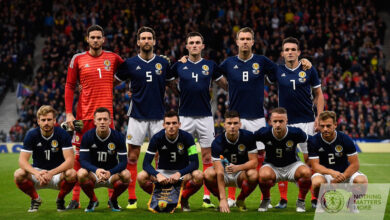
“The most emotional part of this goodbye is for my players, without whom we wouldn’t have had any of the memories that we’ve accumulated from 2019 until now,” Clarke wrote. “They deserve all the praise and adulation that they receive, and it was truly an honour to be called their Gaffer. Thanks for having me, and good luck to my successor.”
This message reflected Clarke’s appreciation for the squad he had led, acknowledging their efforts and the bond they had built. It was a farewell not only to the job but to a chapter of Scottish football history.
Seven Years of Progress
Clarke’s appointment in 2019 marked the beginning of a transformative era for Scotland. At the time, the national team was struggling, ranked as a pot four side in UEFA competitions. Under Clarke’s guidance, Scotland achieved milestones that had eluded them for decades. They qualified for their first World Cup in 28 years and participated in two European Championships. These achievements rekindled national pride and gave supporters moments to cherish.
His success was recognized just a month before the World Cup, when he was handed a four-year contract extension. The Scottish FA saw him as the architect of a revival, a manager who had delivered on the promise of returning Scotland to major tournaments. Yet, the World Cup campaign in North America proved to be a turning point. The defeats and tactical decisions drew criticism, and the momentum that had carried Clarke for years suddenly faltered.
Fan Discontent and Criticism
While Clarke’s tenure brought progress, the World Cup exposed cracks that fans were quick to highlight. His post-match interview after the defeat to Brazil was met with widespread criticism, with many supporters questioning his tactical choices and substitutions. The decisions made throughout the tournament were seen as contributing factors to Scotland’s elimination. For a fanbase that had waited decades to see their team on the world stage, the disappointment was palpable. Clarke’s resignation, though sudden, seemed to acknowledge the growing discontent and the need for a fresh start.
The Scottish FA’s Response
In the wake of Clarke’s departure, Scottish FA chief executive Ian Maxwell offered a balanced perspective. While acknowledging the disappointment of exiting at the group stage, Maxwell emphasized the progress achieved under Clarke’s leadership.
“While we are all disappointed to have exited the World Cup at the group stage, we must not lose sight of the undeniable progress made during Steve’s seven years in charge,” Maxwell stated. “From starting as a pot four team in 2019 to topping our World Cup qualifying group, he has more than delivered on the remit to take Scotland back to a major tournament. We thank Steve for his record-breaking contribution and know that when the disappointment of World Cup elimination subsides, the Scotland supporters will be thankful for the memories of marching with pride at major tournaments once again.”
Maxwell’s words underscored the dual nature of Clarke’s legacy: disappointment in the present, but gratitude for the broader journey. Clarke had restored Scotland’s presence on the international stage, and while the World Cup ended in frustration, his contributions would be remembered.
The Legacy of Clarke’s Tenure
Clarke’s resignation marks the end of an era defined by resilience and progress. He inherited a struggling team and transformed it into one capable of competing at major tournaments. His leadership brought Scotland back to the World Cup after nearly three decades, a feat that will remain a highlight of his career. The emotional farewell message he penned reflected his deep connection to the players and the pride he felt in leading them.
At the same time, his departure highlights the unforgiving nature of international football. Success is measured not only by qualification but by performance on the biggest stage. Scotland’s inability to advance beyond the group stage, coupled with tactical criticisms, ultimately overshadowed the earlier triumphs. Clarke’s decision to step down allows for a new chapter, one in which his successor will inherit both the progress he achieved and the challenges that remain.
Looking Ahead
As Scotland turns the page, the focus shifts to the future. The next manager will be tasked with building on Clarke’s foundation while addressing the shortcomings exposed in North America. The players Clarke praised in his farewell message will remain central to that effort, carrying forward the lessons of this campaign. For the fans, the disappointment of elimination will linger, but the memories of qualifying for the World Cup and competing at major tournaments will endure.
Clarke’s resignation is both an ending and a beginning. It closes a chapter of progress and pride, while opening the door to new leadership and fresh ambitions. His legacy will be remembered as one of revival, even if the final act was marked by frustration.