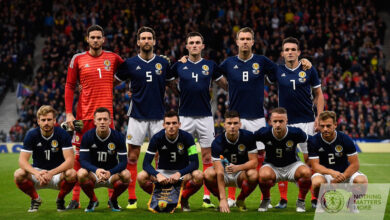
SCOTT McTOMINAY HAS REPORTEDLY MADE ONE REQUEST TO THE SFA IMMEDIATELY AFTER SCOTLAND’S WORLD CUP EXIT


SCOTT McTOMINAY’S DEMAND TO THE SFA AFTER SCOTLAND’S WORLD CUP EXIT
In the immediate aftermath of Scotland’s crushing elimination from the 2026 FIFA World Cup, midfielder Scott McTominay reportedly broke ranks. Just hours after the 3-0 defeat to Brazil at Hard Rock Stadium, the Napoli star bypassed the usual media channels and delivered a direct ultimatum to senior figures at the Scottish Football Association (SFA).
Inside the Scottish dressing room, emotions ran high—fatigue mixed with frustration. Scotland’s Group F campaign had started brightly with a gritty 1-0 win over Haiti, but tactical stagnation against Morocco and Brazil’s ruthless transitions exposed familiar structural shortcomings.
While manager Steve Clarke defended his choices with trademark composure, McTominay turned his anger into concrete demands. The 29-year-old, shaped by elite sports science in Serie A, has grown increasingly outspoken about the gulf between top European clubs and Scotland’s international setup.
According to sources within the SFA delegation, McTominay requested a private meeting with Chief Executive Ian Maxwell and High-Performance Director Graeme Jones before the team’s flight home. It was there he delivered his shock proposal.
The Radical Demand
Rather than raising typical player concerns like bonuses or travel, McTominay stunned officials by formally requesting the immediate creation of a permanent, high-performance training hub in continental Europe. He insisted his continued leadership role depends on the SFA’s willingness to modernize.
His plan calls for a dedicated facility in central or southern Europe to serve as Scotland’s base for international windows, pre-tournament camps, and sports science testing—replacing reliance on domestic sites like Oriam or Lesser Hampden.
McTominay argued that training on identical pitches to those used in UEFA and FIFA finals is vital for technical consistency. Scottish players often train on heavy winter surfaces before abruptly switching to slick hybrid turf at major tournaments. He also highlighted the inefficiency of transporting temporary sports science equipment, proposing a permanent site with advanced biometric tracking, altitude chambers, and recovery suites comparable to Real Madrid, Napoli, or Manchester United.
With many Scottish internationals now playing abroad, a European hub would also reduce travel fatigue. McTominay criticized the outdated practice of flying players into Glasgow or Edinburgh for short camps before heading back out to continental fixtures.
Lessons from Club Football
McTominay’s demand reflects his career path. At Manchester United’s Carrington and later Napoli, he experienced world-class infrastructure. His frustration reportedly peaked during Scotland’s pre-World Cup camp, where logistical delays and poor training pitches hindered preparation.
“Scott sees football through a hyper-professional lens now,” said a former teammate. “He looks at nations like France, Germany, even Austria, with advanced facilities. He’s tired of Scotland arriving at tournaments as underdogs already handicapped by poor preparation. He wants the SFA to match the players’ ambition.”
Panic or Progress?
The SFA’s reaction has been cautious but unsettled. Governing bodies rarely welcome players dictating policy, yet McTominay is Scotland’s most influential figure—a leader crucial for upcoming Nations League and Euro 2028 qualifiers.
Financially, the proposal is daunting. Building and maintaining a European base would cost millions. Yet consecutive tournament qualifications have boosted SFA revenues, leaving fewer excuses to resist modernization.
Clarke’s stance is nuanced. Protective of his staff and domestic bases, he nonetheless knows tactical sophistication requires optimal physical preparation. If McTominay’s pressure unlocks resources, it could expand Clarke’s options.
McTominay’s demand is more than a training ground dispute—it’s a generational challenge to Scottish football’s identity. For decades, the team has been defined by passion, resilience, and defiance against stronger opponents.
Now, McTominay seeks to end the culture of “glorious failure.” By insisting on elite infrastructure, he is urging the SFA to stop acting like a mid-tier nation and start investing like a modern powerhouse.
If ignored, the SFA risks alienating their star midfielder at his peak. If embraced, McTominay’s ultimatum may be remembered as the moment Scotland traded sentimentality for professionalism.